

Pass Microsoft AZ-104 in Just 3 Days – Stress-Free, No Study Needed!
Have questions? Contact us directly on WhatsApp for quick support!
You have an Azure subscription that contains the resources shown in the following table.
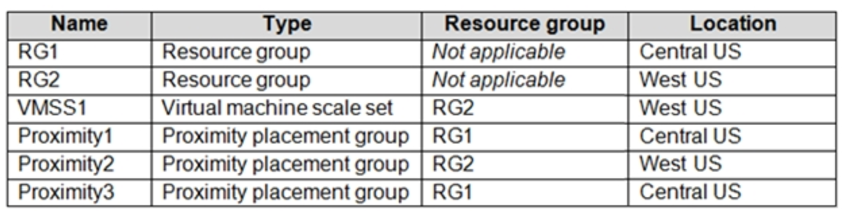
You need to configure a proximity placement group for VMSS1.
Which proximity placement groups should you use?
- A. Proximity2 only
- B. Proximity1, Proximity2, and Proximity3
- C. Proximity1 only
- D. Proximity1 and Proximity3 only
HOTSPOT –
You have an Azure subscription that contains the resources in the following table.
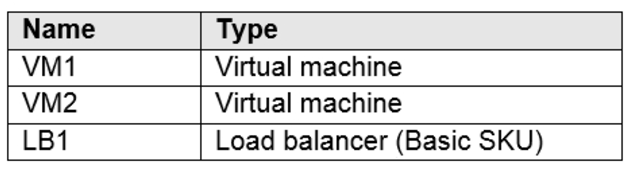
You install the Web Server server role (IIS) on VM1 and VM2, and then add VM1 and VM2 to LB1.
LB1 is configured as shown in the LB1 exhibit. (Click the LB1 tab.)
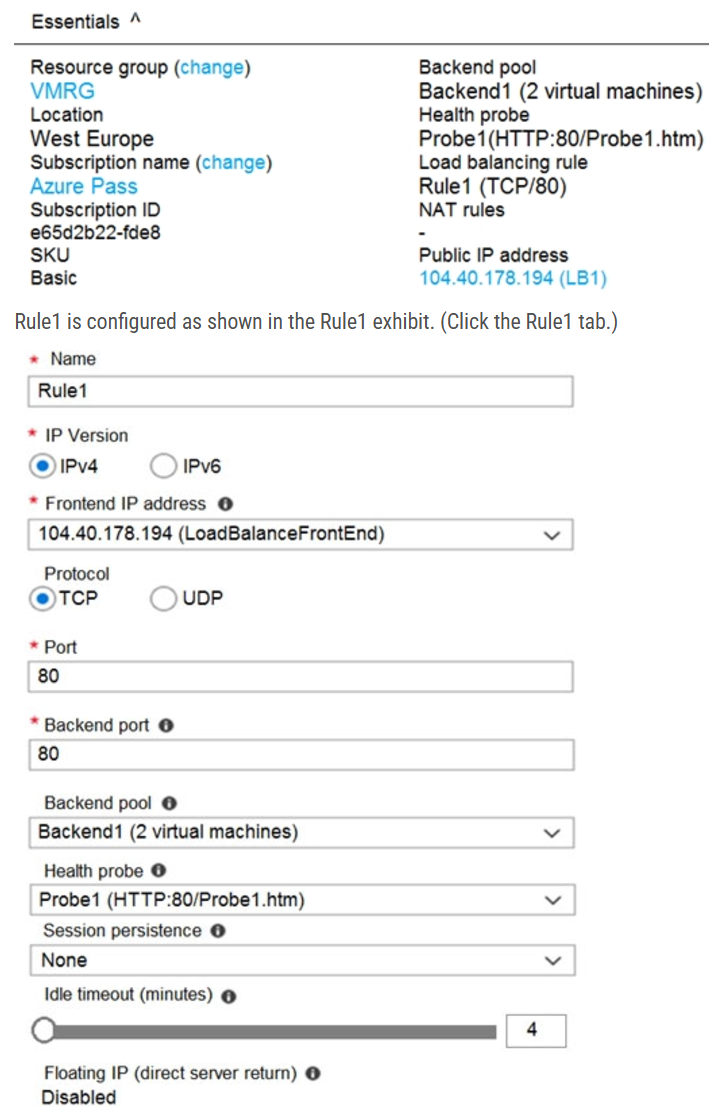
For each of the following statements, select Yes if the statement is true. Otherwise, select No.
NOTE: Each correct selection is worth one point.
Hot Area:
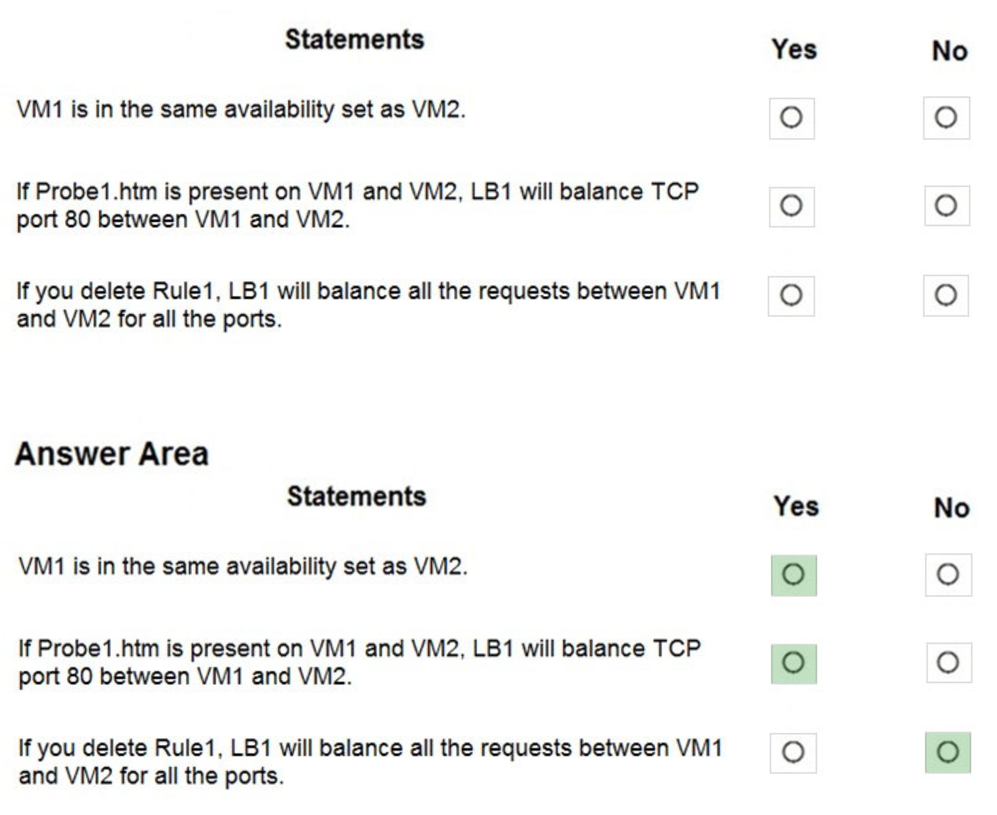
Box 1: Yes –
A Basic Load Balancer supports virtual machines in a single availability set or virtual machine scale set.
Box 2: Yes –
When using load-balancing rules with Azure Load Balancer, you need to specify health probes to allow Load Balancer to detect the backend endpoint status. The configuration of the health probe and probe responses determine which backend pool instances will receive new flows. You can use health probes to detect the failure of an application on a backend endpoint. You can also generate a custom response to a health probe and use the health probe for flow control to manage load or planned downtime. When a health probe fails, Load Balancer will stop sending new flows to the respective unhealthy instance. Outbound connectivity is not impacted, only inbound connectivity is impacted.
Box 3: No –
Reference:
https://docs.microsoft.com/en-us/azure/load-balancer/skus
https://docs.microsoft.com/en-us/azure/load-balancer/load-balancer-custom-probe-overview
You have an Azure subscription that contains two Log Analytics workspaces named Workspace1 and Workspace2 and 100 virtual machines that run Windows Server.
You need to collect performance data and events from the virtual machines. The solution must meet the following requirements:
• Logs must be sent to Workspace1 and Workspace 2.
• All Windows events must be captured.
• All security events must be captured.
What should you install and configure on each virtual machine?
- A. the Azure Monitor agent
- B. the Windows Azure diagnostics extension (WAD)
- C. the Windows VM agent
Note: This question is part of a series of questions that present the same scenario. Each question in the series contains a unique solution that might meet the stated goals. Some question sets might have more than one correct solution, while others might not have a correct solution.
After you answer a question in this section, you will NOT be able to return to it As a result these questions will not appear in the review screen.
You need to use an Azure Pipelines pipeline to build and test an app and test the database of the app. The solution must meet the following requirements.
• The test stages must be run in parallel.
• The Publish_Test_Results stage must always be run.
• The test stages must be run after successful completion of the build stage.
• The Publish_Test_Results stage must be run after completion of all the test stages.
Solution: You include the following elements in the YAML definition of the pipeline.
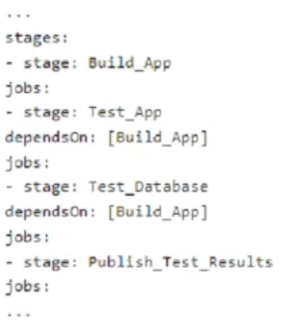
Does this meet the goal?
- A. Yes
- B. No
HOTSPOT –
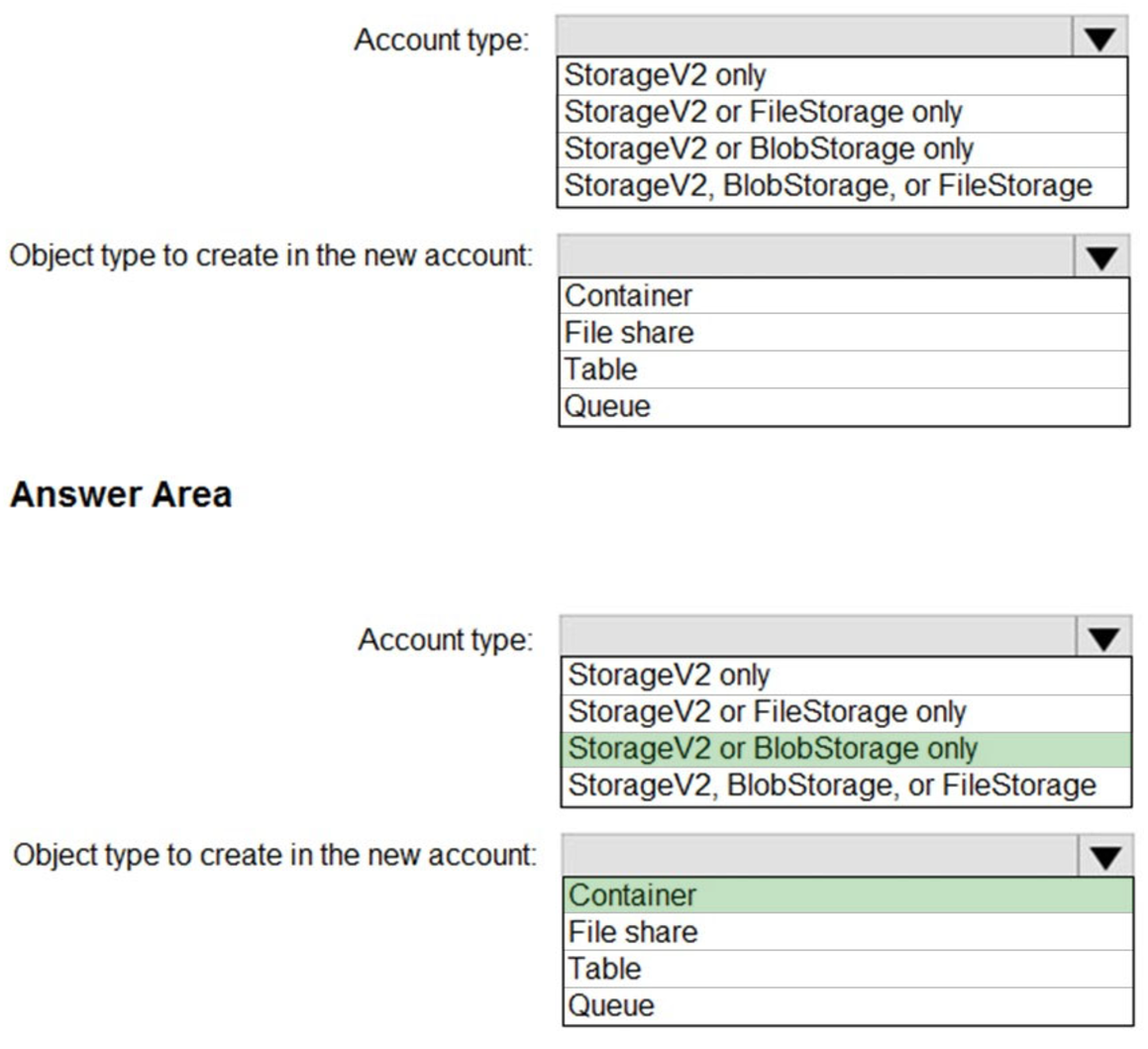
You have an Azure Storage account named storage1 that stores images.
You need to create a new storage account and replicate the images in storage1 to the new account by using object replication.
How should you configure the new account? To answer, select the appropriate options in the answer area.
NOTE: Each correct selection is worth one point.
Hot Area:
HOTSPOT –
You have an Azure virtual machine named VM1 that connects to a virtual network named VNet1. VM1 has the following configurations:
– Subnet: 10.0.0.0/24
– Availability set: AVSet
– Network security group (NSG): None
– Private IP address: 10.0.0.4 (dynamic)
– Public IP address: 40.90.219.6 (dynamic)
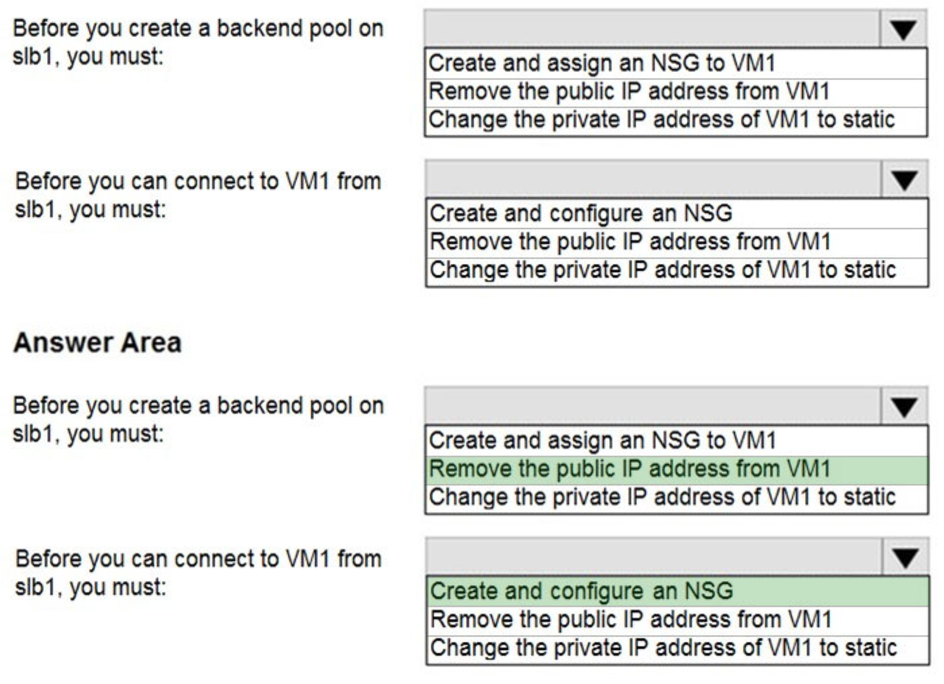
You deploy a standard, Internet-facing load balancer named slb1.
You need to configure slb1 to allow connectivity to VM1.
Which changes should you apply to VM1 as you configure slb1? To answer, select the appropriate options in the answer area.
NOTE: Each correct selection is worth one point.
Hot Area:
Change the private IP address of VM1 to static
Box 1: Remove the public IP address from VM1
Note: A public load balancer can provide outbound connections for virtual machines (VMs) inside your virtual network. These connections are accomplished by translating their private IP addresses to public IP addresses. Public Load Balancers are used to load balance internet traffic to your VMs.
Box 2: Create and configure an NSG
NSGs are used to explicitly permit allowed traffic. If you do not have an NSG on a subnet or NIC of your virtual machine resource, traffic is not allowed to reach this resource.
Reference:
https://docs.microsoft.com/en-us/azure/load-balancer/load-balancer-overview
You have an Azure subscription that contains a virtual machine named VM1 and an Azure function named App1.
You need to create an alert rule that will run App1 if VM1 stops.
What should you create for the alert rule?
- A. an application security group
- B. a security group that has dynamic device membership
- C. an action group
- D. an application group
HOTSPOT –
You have an Azure subscription named Subscription1 that contains a virtual network VNet1.
You add the users in the following table.
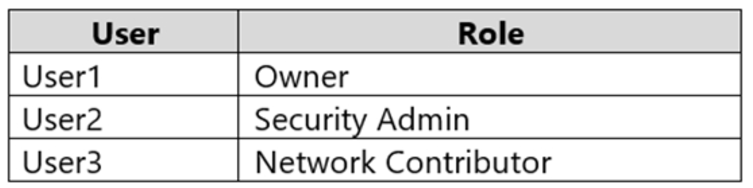
Which user can perform each configuration? To answer, select the appropriate options in the answer area.
NOTE: Each correct selection is worth one point.
Hot Area:
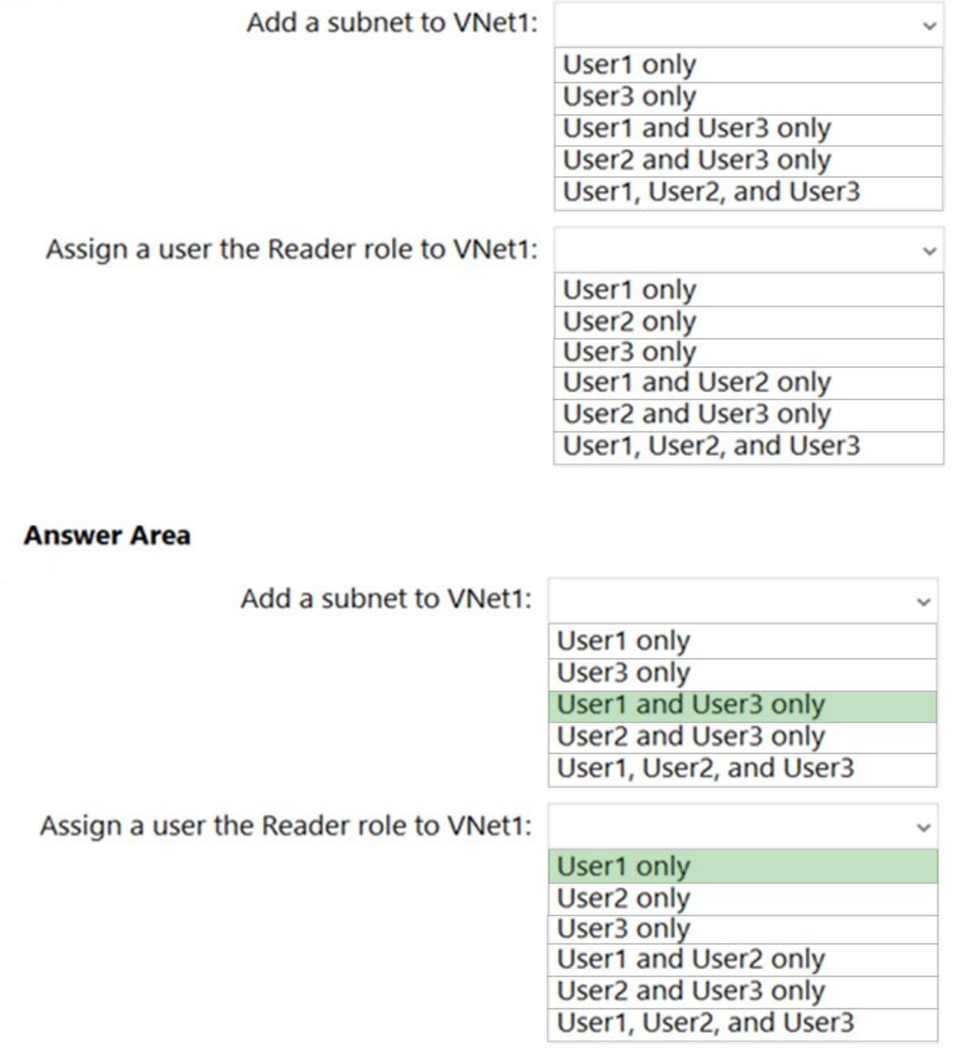
Box 1: User1 and User3 only.
User1: The Owner Role lets you manage everything, including access to resources.
User3: The Network Contributor role lets you manage networks, including creating subnets.
Box 2: User1 only.
The Security Admin role: In Security Center only: Can view security policies, view security states, edit security policies, view alerts and recommendations, dismiss alerts and recommendations.
Reference:
https://docs.microsoft.com/en-us/azure/role-based-access-control/built-in-roles https://docs.microsoft.com/en-us/azure/role-based-access-control/resource-provider-operations#microsoftnetwork
You have an on-premises server that contains a folder named D:\Folder1.
You need to copy the contents of D:\Folder1 to the public container in an Azure Storage account named contosodata.
Which command should you run?
- A. https://contosodata.blob.core.windows.net/public
- B. azcopy sync D:\folder1 https://contosodata.blob.core.windows.net/public –snapshot
- C. azcopy copy D:\folder1 https://contosodata.blob.core.windows.net/public –recursive
- D. az storage blob copy start-batch D:\Folder1 https://contosodata.blob.core.windows.net/public
Note: This question is part of a series of questions that present the same scenario. Each question in the series contains a unique solution that might meet the stated goals. Some question sets might have more than one correct solution, while others might not have a correct solution.
After you answer a question in this section, you will NOT be able to return to it. As a result, these questions will not appear in the review screen.
You have an Azure subscription named Subscription1. Subscription1 contains a resource group named RG1. RG1 contains resources that were deployed by using templates.
You need to view the date and time when the resources were created in RG1.
Solution: From the RG1 blade, you click Automation script.
Does this meet the goal?
- A. Yes
- B. No