

Pass Microsoft AZ-104 in Just 3 Days – Stress-Free, No Study Needed!
Have questions? Contact us directly on WhatsApp for quick support!
HOTSPOT
–
You have an Azure subscription.
You plan to deploy a storage account named storage1 by using the following Azure Resource Manager (ARM) template.
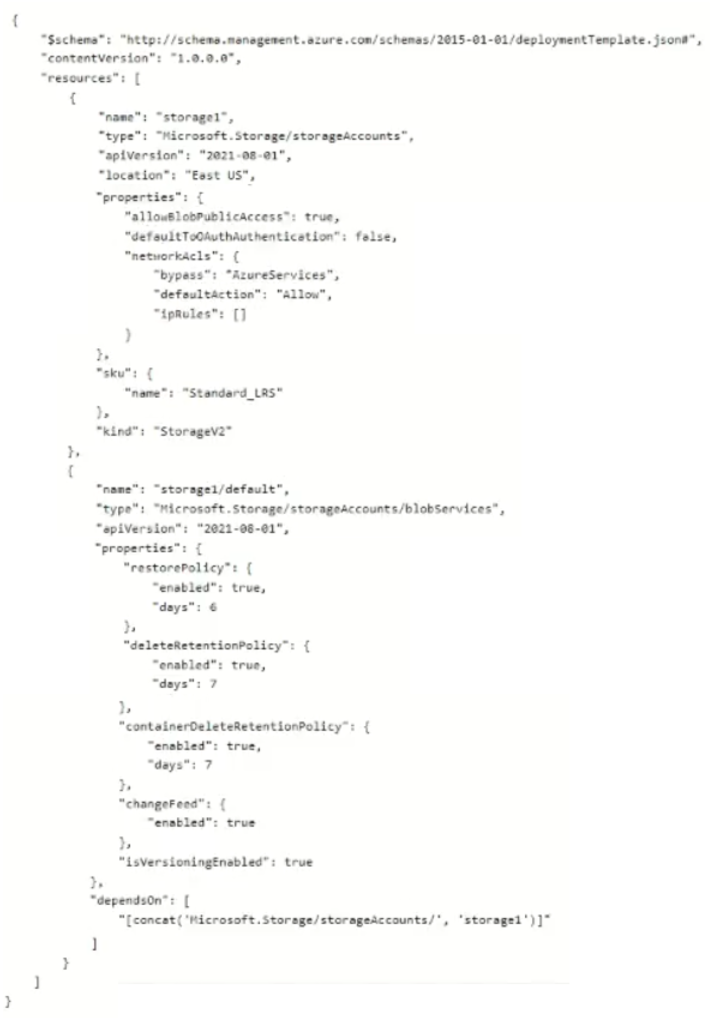
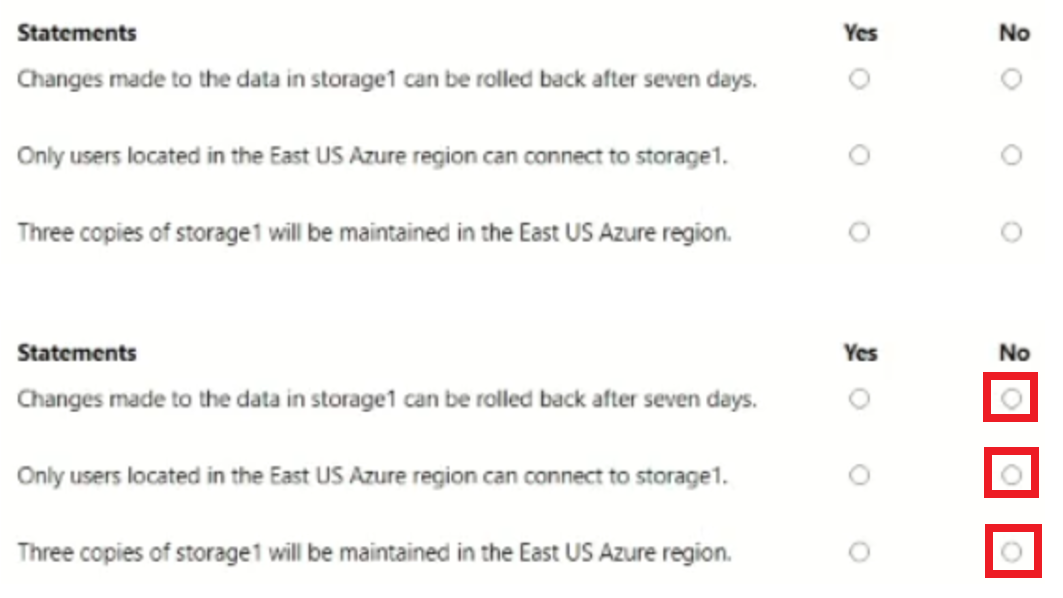
For each of the following statements, select Yes if the statement is hue. Otherwise, select No.
NOTE: Each correct selection is worth one point.
You have an Azure virtual machine named VM1 that runs Windows Server 2019.
You save VM1 as a template named Template1 to the Azure Resource Manager library.
You plan to deploy a virtual machine named VM2 from Template1.
What can you configure during the deployment of VM2?
- A. operating system
- B. administrator username
- C. virtual machine size
- D. resource group
Note: This question is part of a series of questions that present the same scenario. Each question in the series contains a unique solution that might meet the stated goals. Some question sets might have more than one correct solution, while others might not have a correct solution.
After you answer a question in this section, you will NOT be able to return to it. As a result, these questions will not appear in the review screen.
You have an Azure subscription that contains the virtual machines shown in the following table.

You deploy a load balancer that has the following configurations:
– Name: LB1
– Type: Internal
– SKU: Standard
– Virtual network: VNET1
You need to ensure that you can add VM1 and VM2 to the backend pool of LB1.
Solution: You create a Basic SKU public IP address, associate the address to the network interface of VM1, and then start VM1.
Does this meet the goal?
- A. Yes
- B. No
HOTSPOT
–
You have an Azure subscription that contains the vaults shown in the following table.
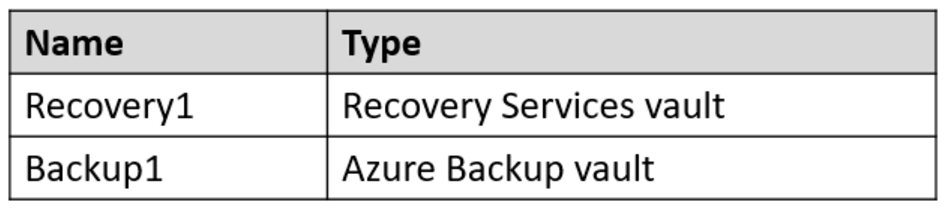
You deploy the virtual machines shown in the following table.
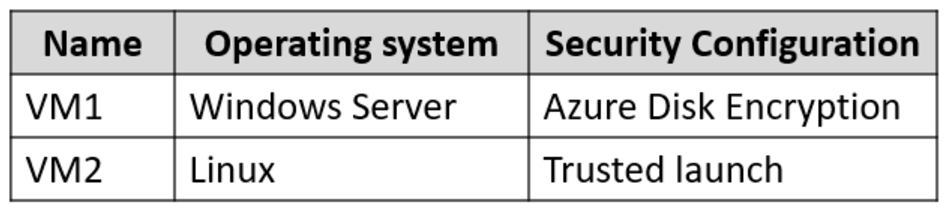
You have the backup policies shown in the following table.
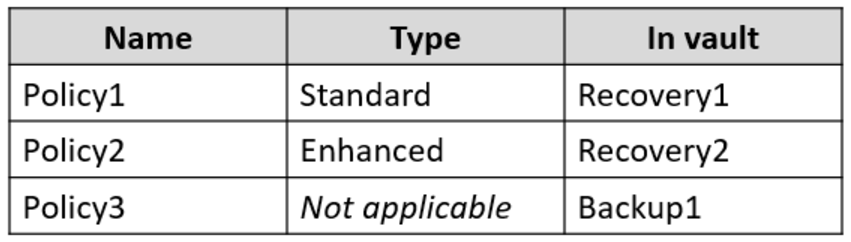
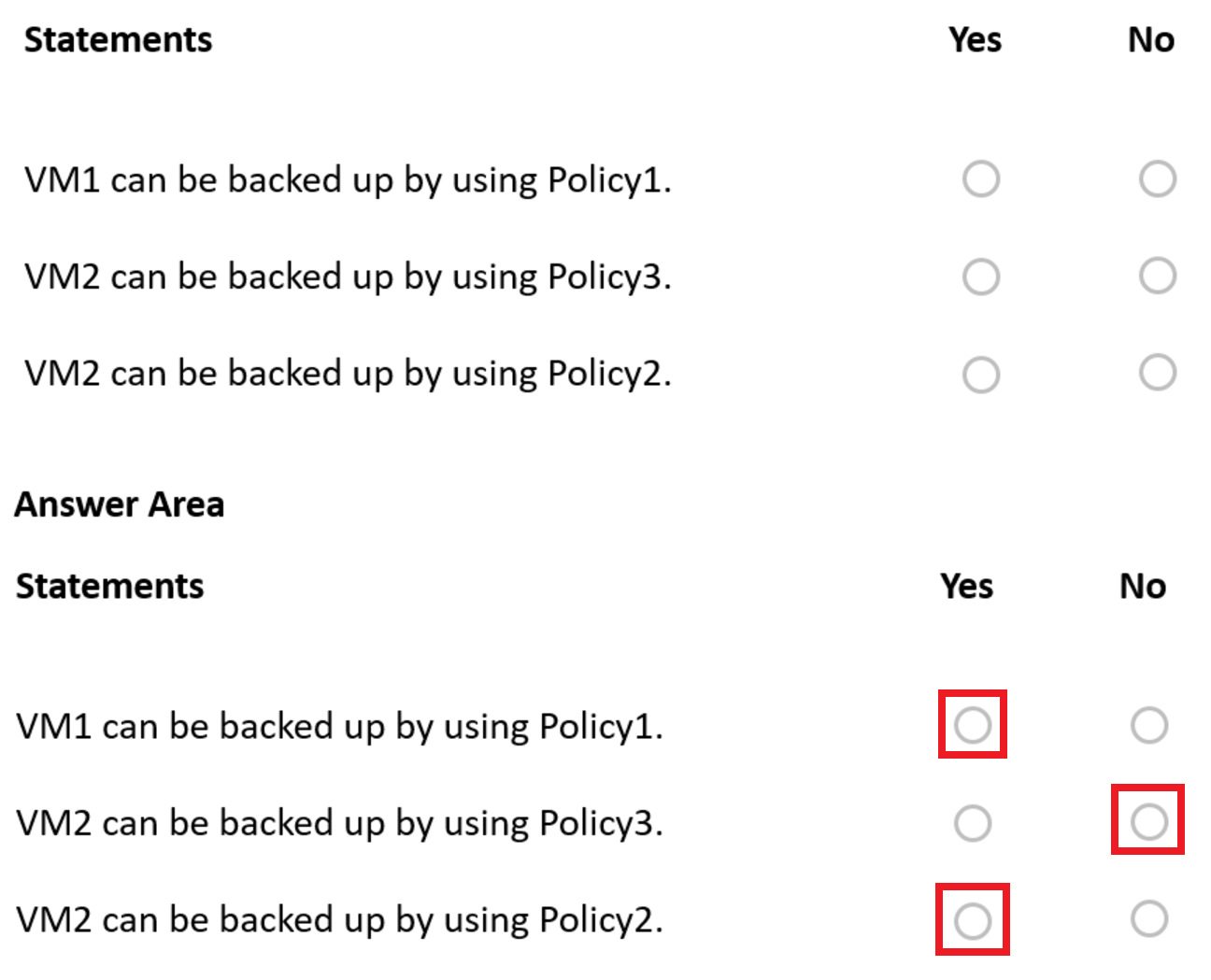
For each of the following statements, select Yes if the statement is true. Otherwise, select No.
NOTE: Each correct selection is worth one point.
You have an Azure subscription that contains an Azure virtual machine named VM1. VM1 runs a financial reporting app named App1 that does not support multiple active instances.
At the end of each month, CPU usage for VM1 peaks when App1 runs.
You need to create a scheduled runbook to increase the processor performance of VM1 at the end of each month.
What task should you include in the runbook?
- A. Add the Azure Performance Diagnostics agent to VM1.
- B. Modify the VM size property of VM1.
- C. Add VM1 to a scale set.
- D. Increase the vCPU quota for the subscription.
- E. Add a Desired State Configuration (DSC) extension to VM1
Note: This question is part of a series of questions that present the same scenario. Each question in the series contains a unique solution that might meet the stated goals. Some question sets might have more than one correct solution, while others might not have a correct solution.
After you answer a question in this section, you will NOT be able to return to it. As a result, these questions will not appear in the review screen.
You have an Azure subscription that contains the virtual machines shown in the following table.
You deploy a load balancer that has the following configurations:
– Name: LB1
– Type: Internal
– SKU: Standard
– Virtual network: VNET1
You need to ensure that you can add VM1 and VM2 to the backend pool of LB1.
Solution: You create a Standard SKU public IP address, associate the address to the network interface of VM1, and then stop VM2.
Does this meet the goal?
- A. Yes
- B. No
You have an Azure subscription. The subscription contains virtual machines that connect to a virtual network named VNet1.
You plan to configure Azure Monitor for VM Insights.
You need to ensure that all the virtual machines only communicate with Azure Monitor through VNet1.
What should you create first?
- A. a data collection rule (DCR)
- B. a Log Analytics workspace
- C. an Azure Monitor Private Link Scope (AMPLS)
- D. a private endpoint
HOTSPOT
–
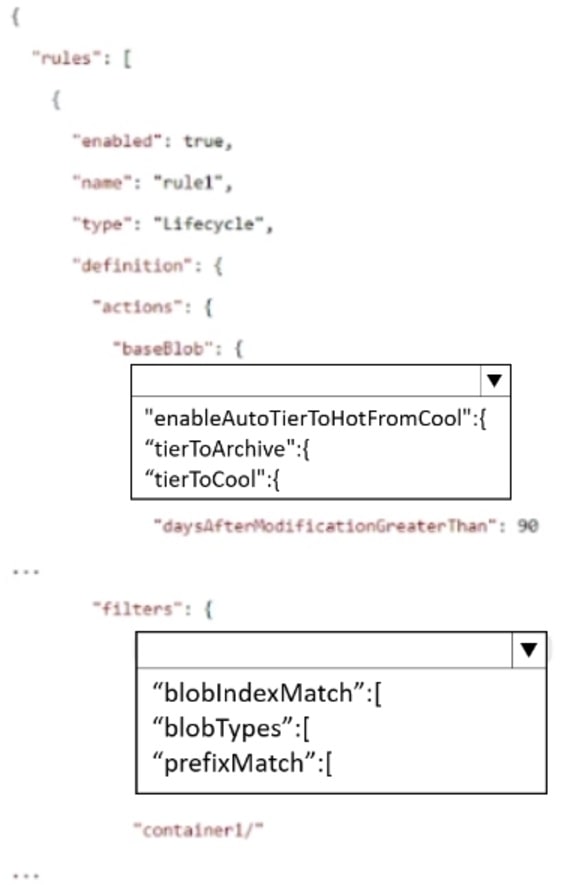
You have an Azure subscription that contains a storage account named storage1. The storage1 account contains a container named container1.
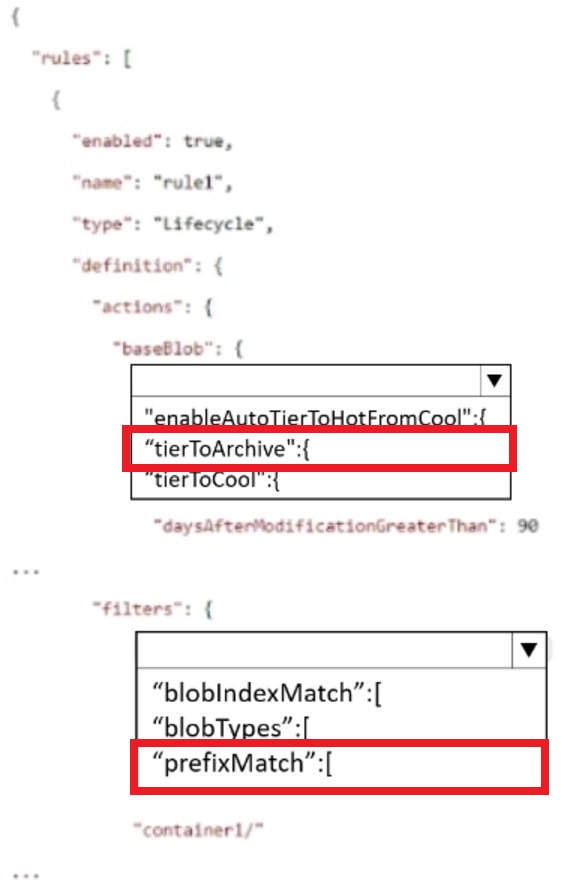
You need to create a lifecycle management rule for storage1 that will automatically move the blobs in container1 to the lowest-cost tier after 90 days.
How should you complete the rule? To answer, select the appropriate options in the answer area.
NOTE: Each correct selection is worth one point.
Answer:
You plan to deploy several Azure virtual machines that will run Windows Server 2019 in a virtual machine scale set by using an Azure Resource Manager template.
You need to ensure that NGINX is available on all the virtual machines after they are deployed.
What should you use?
- A. Deployment Center in Azure App Service
- B. A Desired State Configuration (DSC) extension
- C. the New-AzConfigurationAssignment cmdlet
- D. a Microsoft Intune device configuration profile
Note: This question is part of a series of questions that present the same scenario. Each question in the series contains a unique solution that might meet the stated goals. Some question sets might have more than one correct solution, while others might not have a correct solution.
After you answer a question in this section, you will NOT be able to return to it. As a result, these questions will not appear in the review screen.
You have an Azure subscription that contains the virtual machines shown in the following table.
You deploy a load balancer that has the following configurations:
– Name: LB1
– Type: Internal
– SKU: Standard
– Virtual network: VNET1
You need to ensure that you can add VM1 and VM2 to the backend pool of LB1.
Solution: You create two Standard SKU public IP addresses and associate a Standard SKU public IP address to the network interface of each virtual machine.
Does this meet the goal?
- A. Yes
- B. No