
Pass Microsoft AZ-104 in Just 3 Days – Stress-Free, No Study Needed!
Have questions? Contact us directly on WhatsApp for quick support!
You have an Azure subscription that contains a user named User1 and a storage account named storage1. The storage1 account contains the resources shown in the following table.
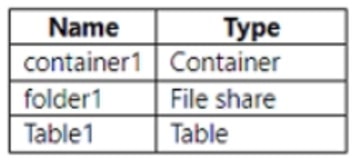
User1 is assigned the following roles for storage1:
• Storage Blob Data Reader
• Storage Table Data Contributor
• Storage File Data SMB Share Contributor
For storage1, you create a shared access signature (SAS) named SAS1 that has the settings shown in the following exhibit. (Click the Exhibit tab.)
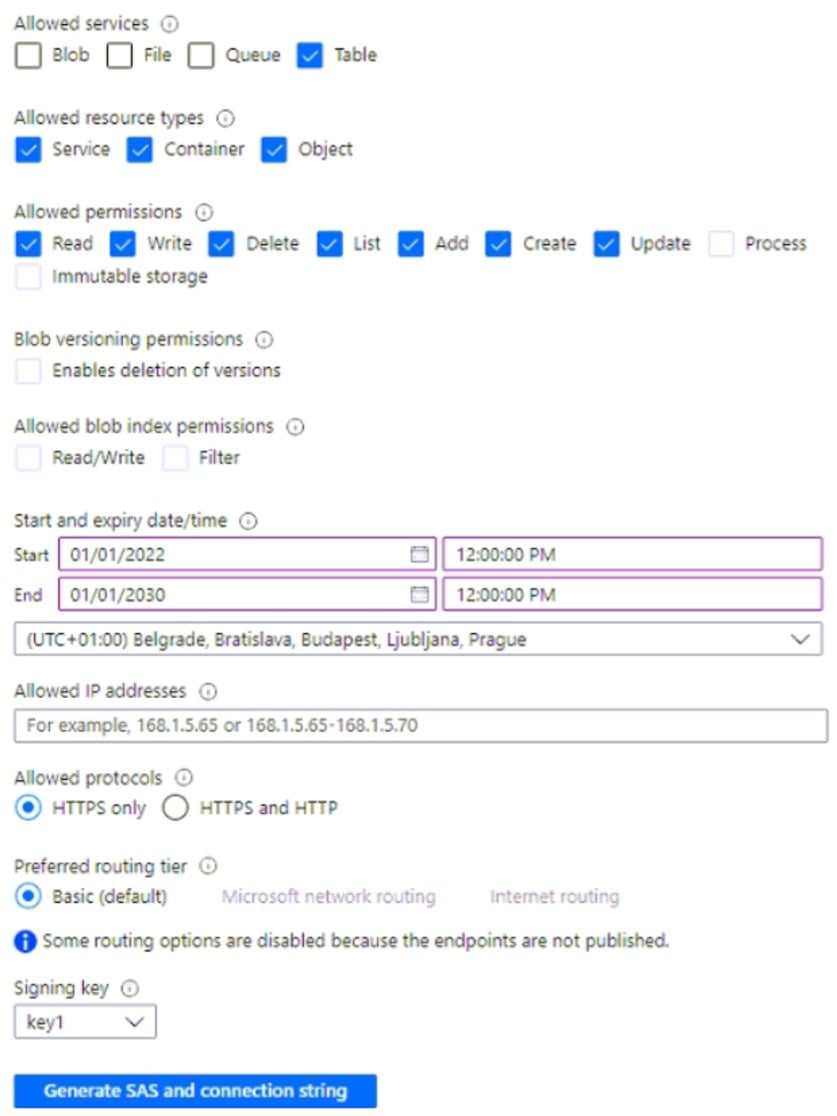
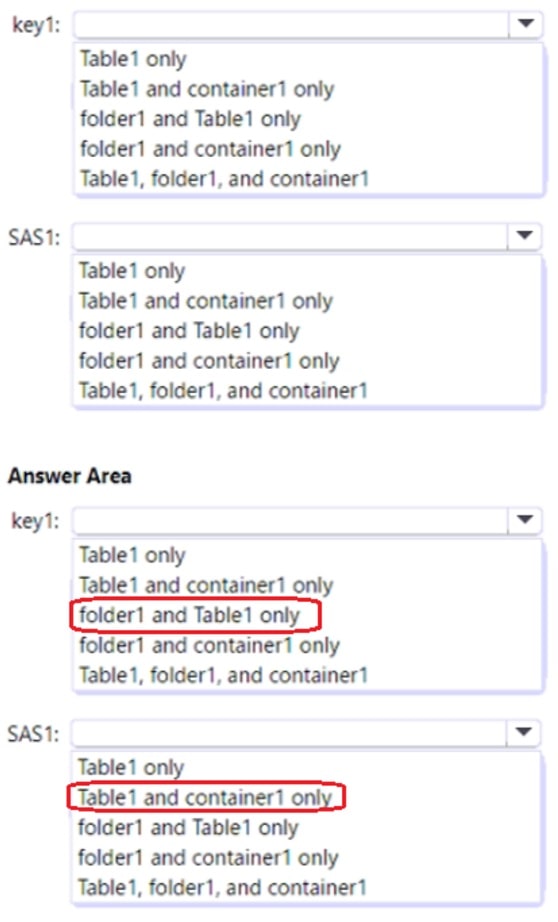
To which resources can User1 write by using SAS1 and key1? To answer, select the appropriate options in the answer area.
NOTE: Each correct selection is worth one point.
Note: This question is part of a series of questions that present the same scenario. Each question in the series contains a unique solution that might meet the stated goals. Some question sets might have more than one correct solution, while others might not have a correct solution.
After you answer a question in this section, you will NOT be able to return to it. As a result, these questions will not appear in the review screen.
You have an app named App1 that is installed on two Azure virtual machines named VM1 and VM2. Connections to App1 are managed by using an Azure Load
Balancer.
The effective network security configurations for VM2 are shown in the following exhibit.
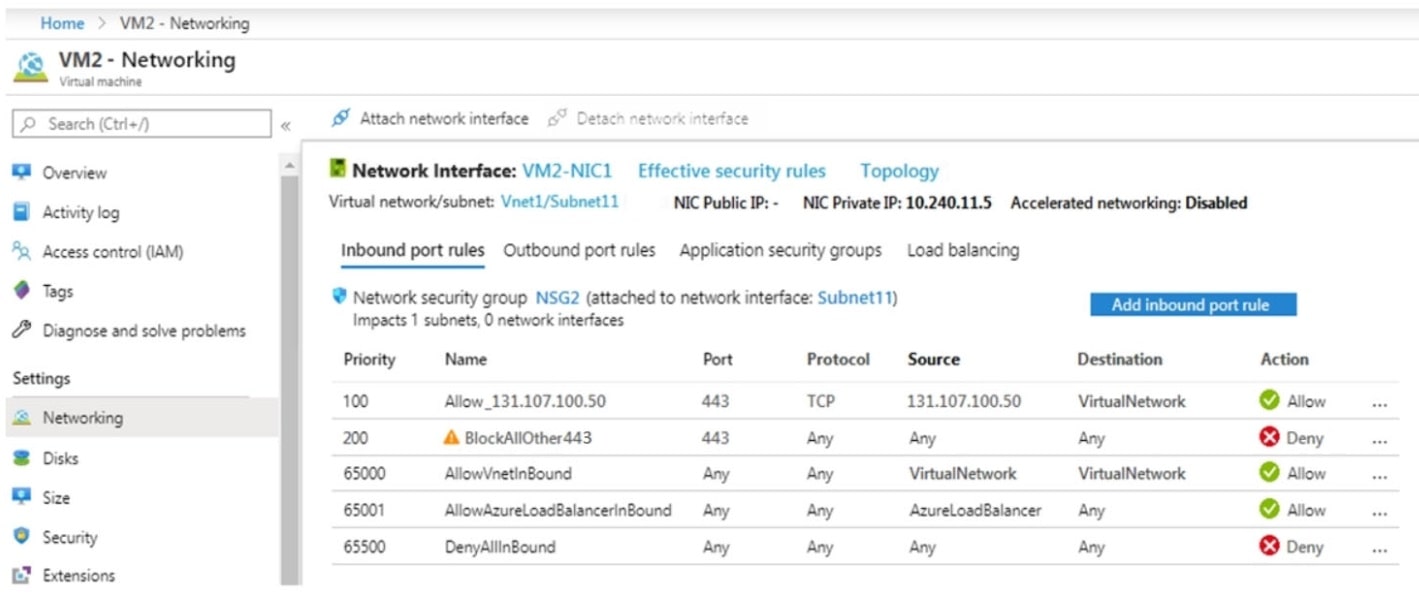
You discover that connections to App1 from 131.107.100.50 over TCP port 443 fail.
You verify that the Load Balancer rules are configured correctly.
You need to ensure that connections to App1 can be established successfully from 131.107.100.50 over TCP port 443.
Solution: You delete the BlockAllOther443 inbound security rule.
Does this meet the goal?
- A. Yes
- B. No
You have an Azure subscription. The subscription contains 10 virtual machines that run Windows Server. Each virtual machine hosts a website in IIS and has the Azure Monitor Agent installed.
You need to collect the IIS logs from each virtual machine and store them in a Log Analytics workspace.
What should you configure first?
- A. a data collection endpoint
- B. an Azure Monitor Private Link Scope (AMPLS)
- C. Diagnostic settings
- D. VM insights
- E. a private endpoint
HOTSPOT
–
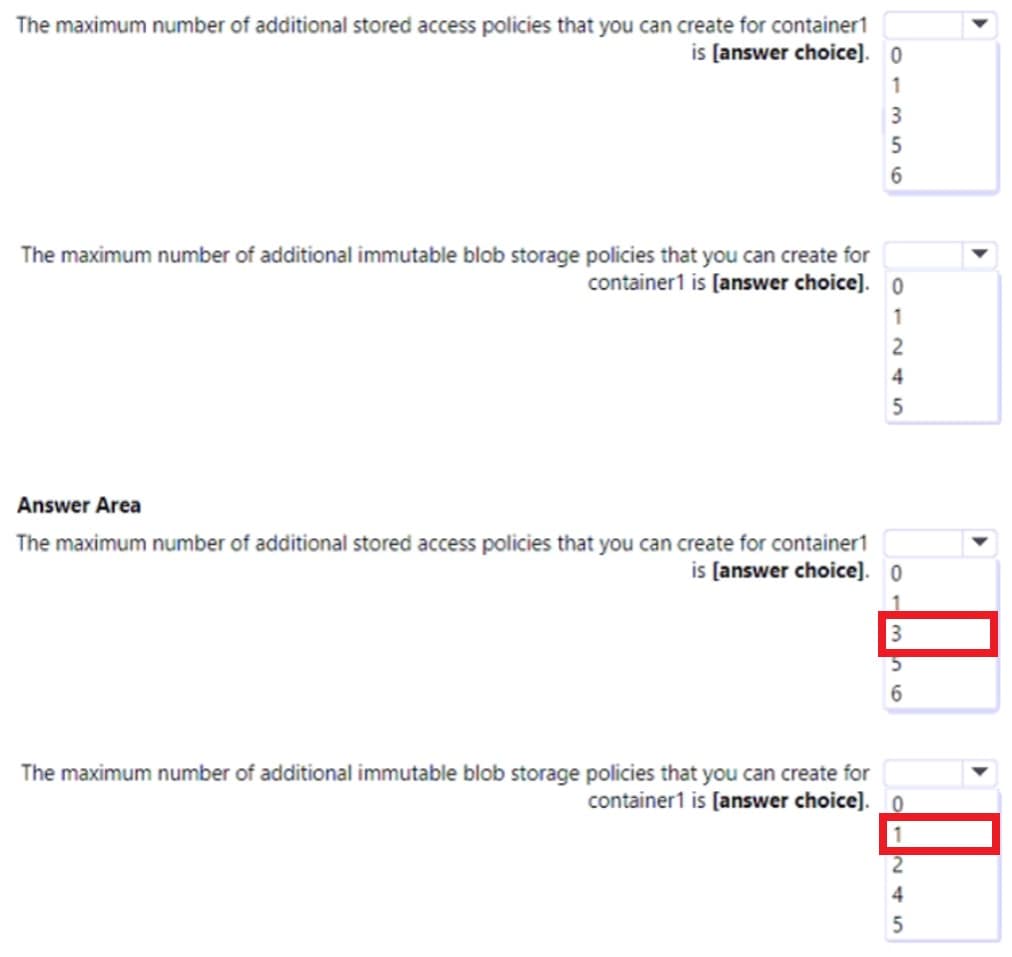
You have an Azure subscription that contains the storage account shown in the following exhibit.
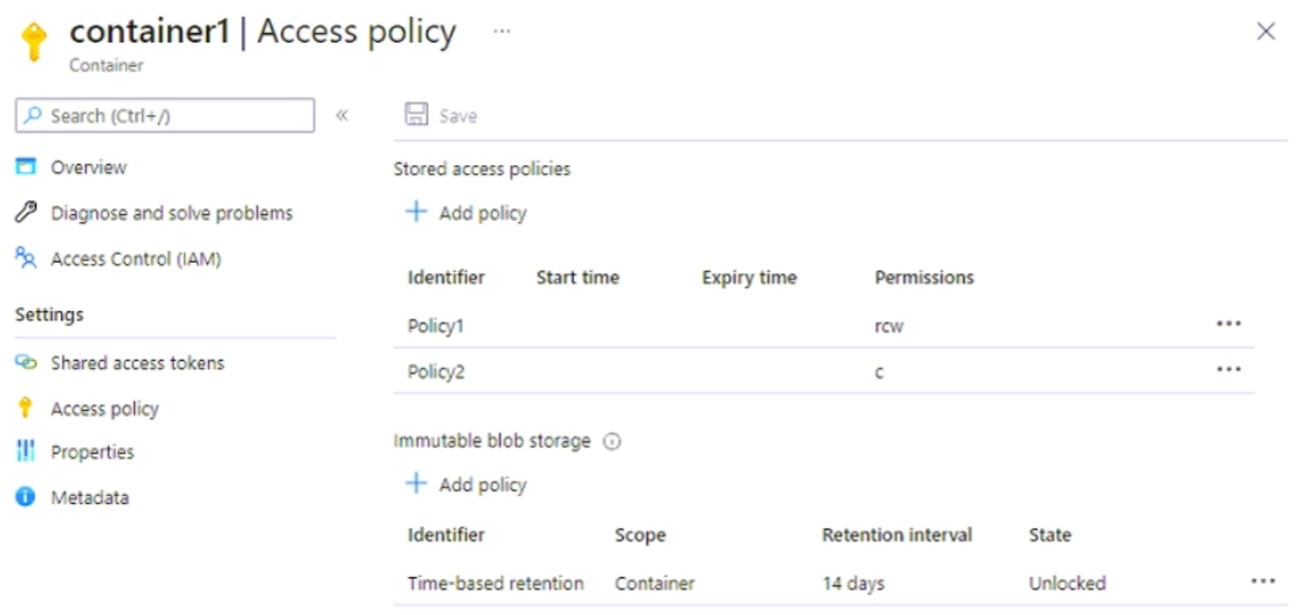
Use the drop-down menus to select the answer choice that completes each statement based on the information presented in the graphic
NOTE: Each correct selection is worth one point.
You have an Azure web app named App1. App1 has the deployment slots shown in the following table:
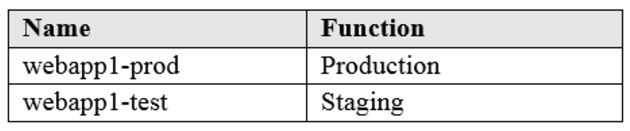
In webapp1-test, you test several changes to App1.
You back up App1.
You swap webapp1-test for webapp1-prod and discover that App1 is experiencing performance issues.
You need to revert to the previous version of App1 as quickly as possible.
What should you do?
- A. Redeploy App1
- B. Swap the slots
- C. Clone App1
- D. Restore the backup of App1
Note: This question is part of a series of questions that present the same scenario. Each question in the series contains a unique solution that might meet the stated goals. Some question sets might have more than one correct solution, while others might not have a correct solution.
After you answer a question in this section, you will NOT be able to return to it. As a result, these questions will not appear in the review screen.
You have an app named App1 that is installed on two Azure virtual machines named VM1 and VM2. Connections to App1 are managed by using an Azure Load
Balancer.
The effective network security configurations for VM2 are shown in the following exhibit.
You discover that connections to App1 from 131.107.100.50 over TCP port 443 fail.
You verify that the Load Balancer rules are configured correctly.
You need to ensure that connections to App1 can be established successfully from 131.107.100.50 over TCP port 443.
Solution: You modify the priority of the Allow_131.107.100.50 inbound security rule.
Does this meet the goal?
- A. Yes
- B. No
HOTSPOT
–
You have an Azure subscription that contains two storage accounts named contoso101 and contoso102.
The subscription contains the virtual machines shown in the following table.

VNet1 has service endpoints configured as shown in the Service endpoints exhibit. (Click the Service endpoints tab.)
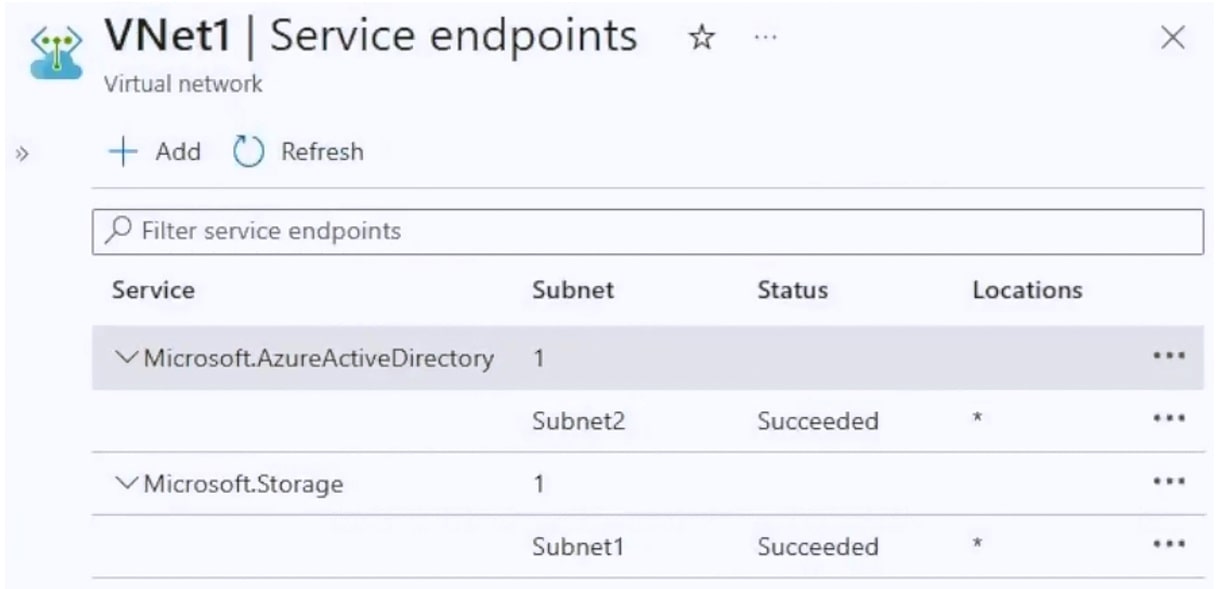
The Microsoft.Storage service endpoint has the service endpoint policy shown in the Microsoft.Storage exhibit. (Click the Microsoft.Storage tab.)
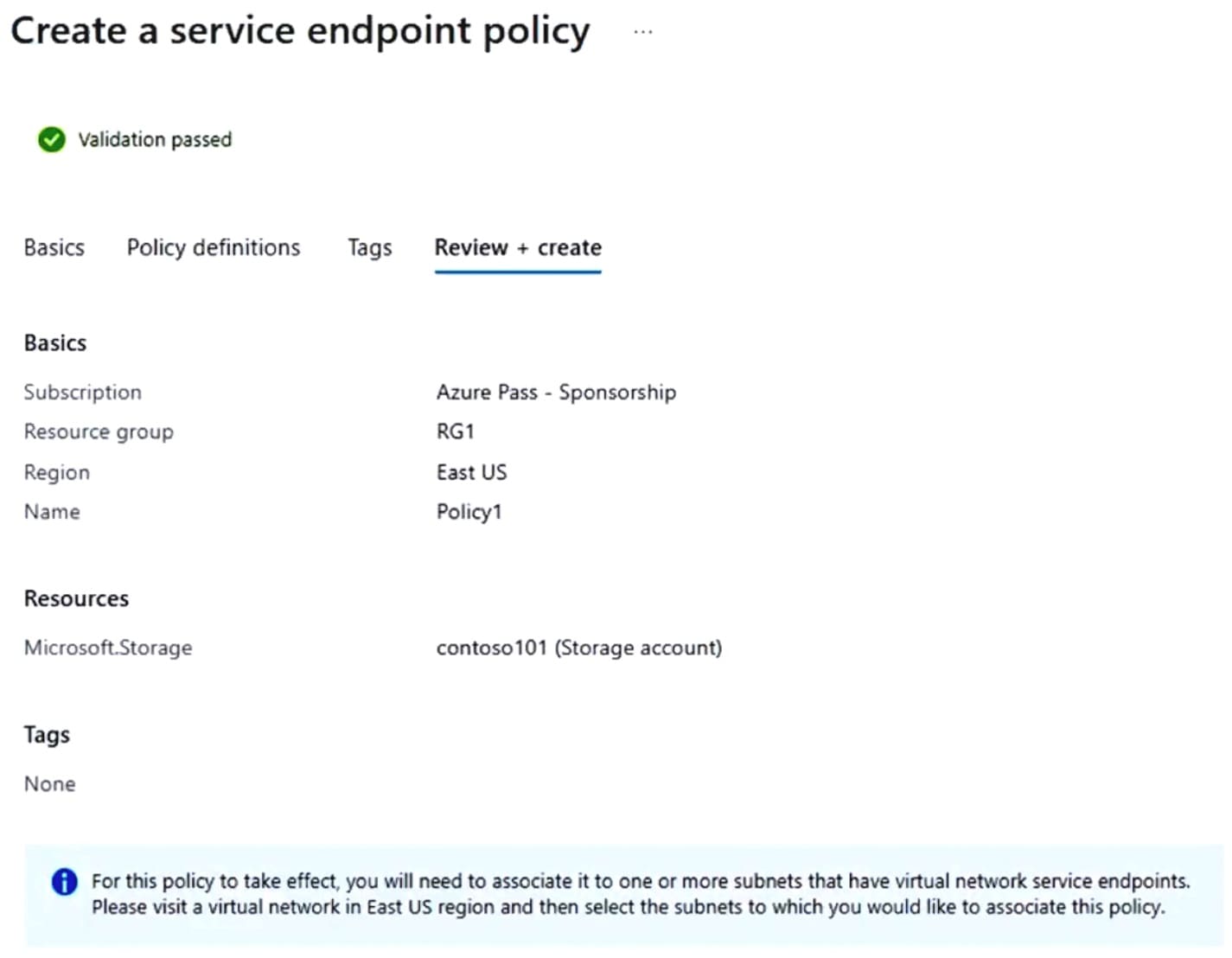
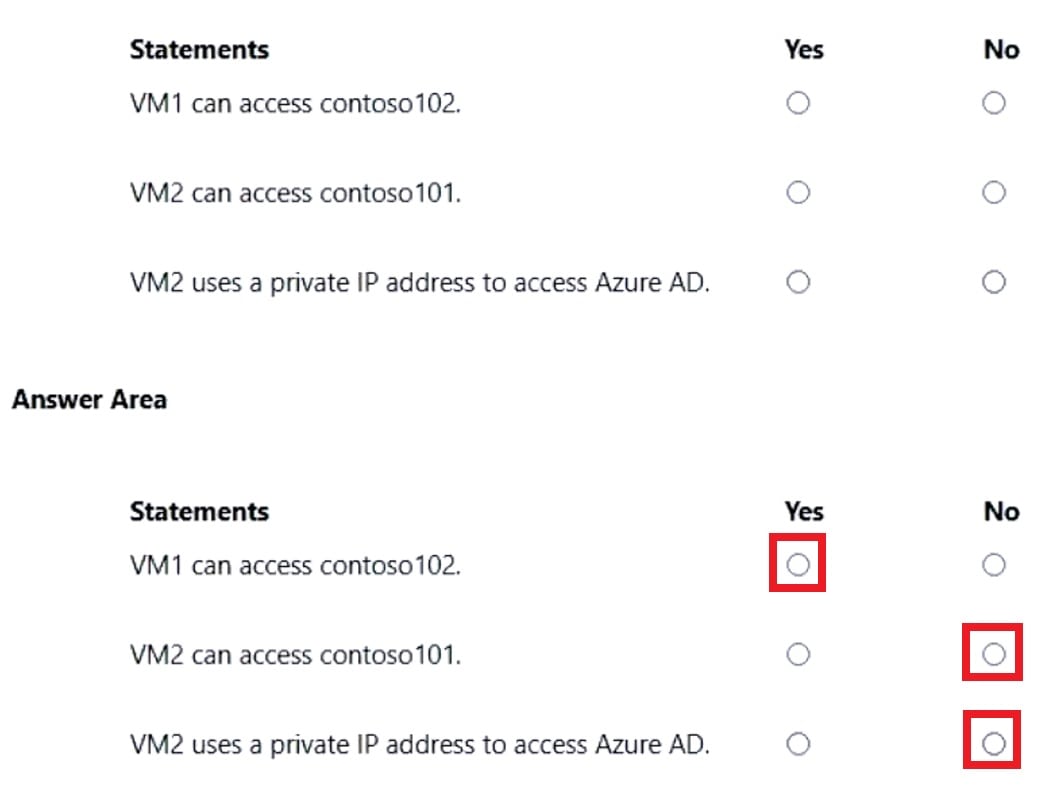
For each of the following statements, select Yes if the statement is true. Otherwise, select No.
NOTE: Each correct selection is worth one point.
You have an Azure subscription named Subscription1.
You have 5 TB of data that you need to transfer to Subscription1.
You plan to use an Azure Import/Export job.
What can you use as the destination of the imported data?
- A. Azure Blob Storage
- B. Azure Data Lake Store
- C. Azure SQL Database
- D. a virtual machine
HOTSPOT –
You have an Azure subscription named Subscription1. Subscription1 contains two Azure virtual machines VM1 and VM2. VM1 and VM2 run Windows Server
2016.
VM1 is backed up daily by Azure Backup without using the Azure Backup agent.
VM1 is affected by ransomware that encrypts data.
You need to restore the latest backup of VM1.
To which location can you restore the backup? To answer, select the appropriate options in the answer area.
NOTE: Each correct selection is worth one point.
Hot Area:
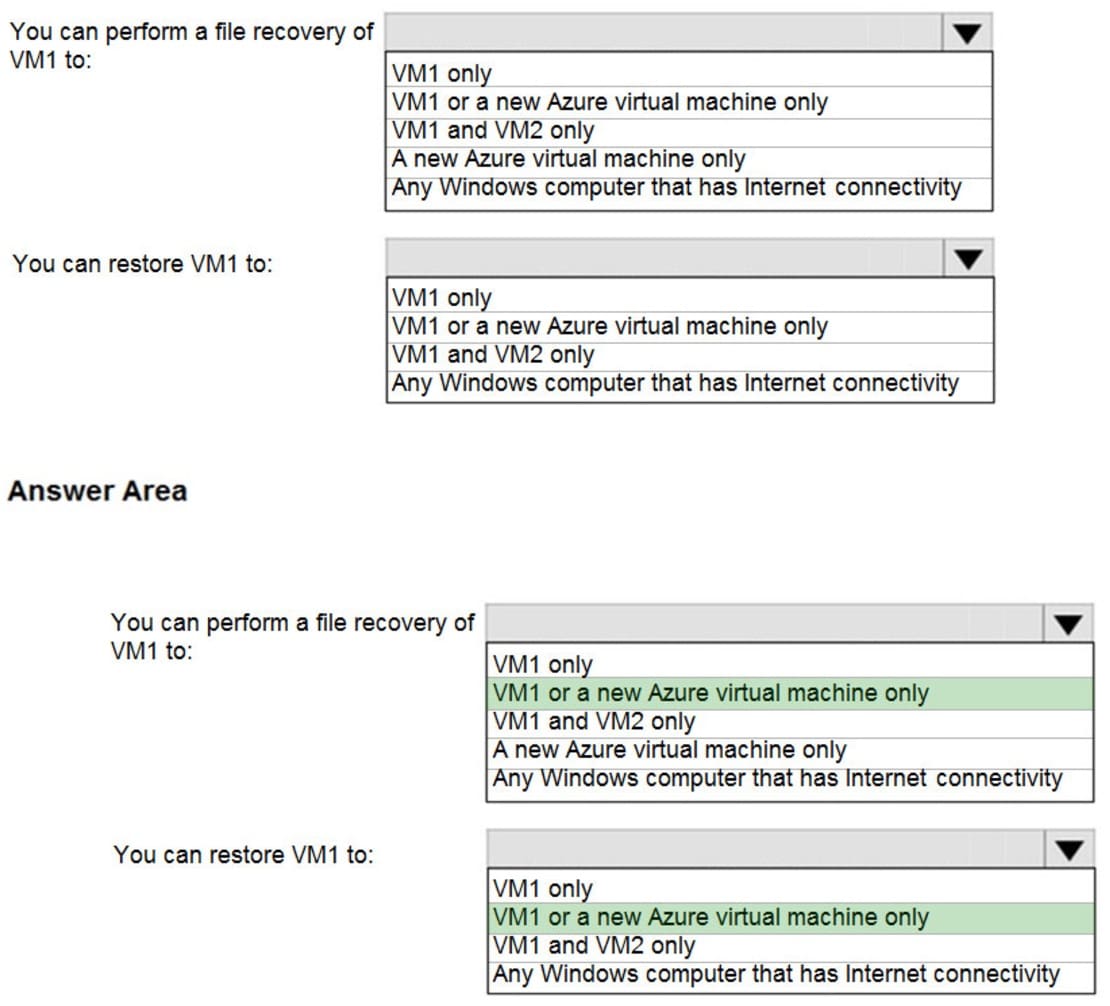
Note: The new VM must be in the same region.
Reference:
https://docs.microsoft.com/en-us/azure/backup/backup-azure-arm-restore-vms
Note: This question is part of a series of questions that present the same scenario. Each question in the series contains a unique solution that might meet the stated goals. Some question sets might have more than one correct solution, while others might not have a correct solution.
After you answer a question in this section, you will NOT be able to return to it. As a result, these questions will not appear in the review screen.
You have an Azure subscription that contains 10 virtual networks. The virtual networks are hosted in separate resource groups.
Another administrator plans to create several network security groups (NSGs) in the subscription.
You need to ensure that when an NSG is created, it automatically blocks TCP port 8080 between the virtual networks.
Solution: You assign a built-in policy definition to the subscription.
Does this meet the goal?
- A. Yes
- B. No