

Pass Microsoft AZ-104 in Just 3 Days – Stress-Free, No Study Needed!
Have questions? Contact us directly on WhatsApp for quick support!
You have an Azure subscription named Subscription1.
You have 5 TB of data that you need to transfer to Subscription1.
You plan to use an Azure Import/Export job.
What can you use as the destination of the imported data?
- A. Azure Data Lake Store
- B. Azure File Storage
- C. Azure SQL Database
- D. the Azure File Sync Storage Sync Service
You plan to deploy several Azure virtual machines that will run Windows Server 2019 in a virtual machine scale set by using an Azure Resource Manager template.
You need to ensure that NGINX is available on all the virtual machines after they are deployed.
What should you use?
- A. the New-AzConfigurationAssignment cmdlet
- B. a Desired State Configuration (DSC) extension
- C. Azure Active Directory (Azure AD) Application Proxy
- D. Azure Application Insights
You have an Azure subscription that contains two virtual machines as shown in the following table.

You perform a reverse DNS lookup for 10.0.0.4 from VM2.
Which FQDN will be returned?
- A. vm1.core.windows.net
- B. vm1.azure.com
- C. vm1.westeurope.cloudapp.azure.com
- D. vm1.internal.cloudapp.net
You have an Azure subscription that contains a storage account named storage1.
You plan to use conditions when assigning role-based access control (RBAC) roles to storage1.
Which storage1 services support conditions when assigning roles?
- A. containers only
- B. file shares only
- C. tables only
- D. queues only
- E. containers and queues only
- F. files shares and tables only
HOTSPOT –
You have an Azure subscription that contains the resources shown in the following table.
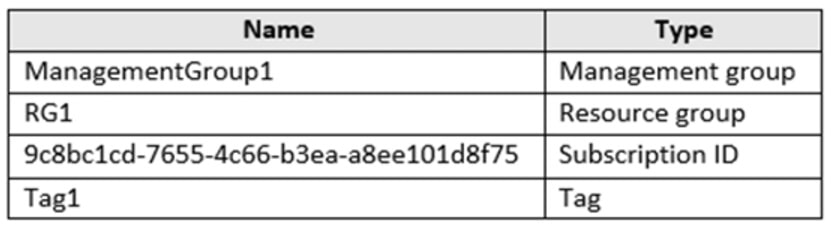
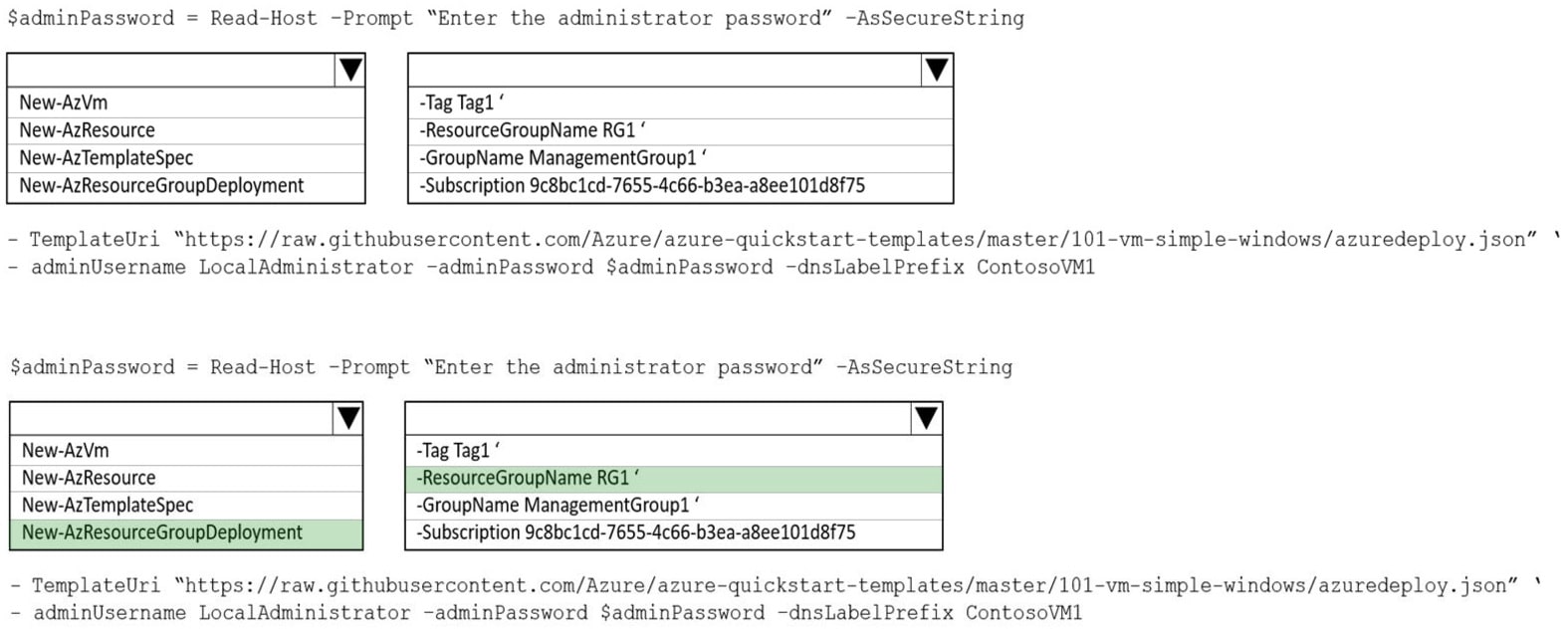
In Azure Cloud Shell, you need to create a virtual machine by using an Azure Resource Manager (ARM) template.
How should you complete the command? To answer, select the appropriate options in the answer area.
NOTE: Each correct selection is worth one point.
Hot Area:
Note: This question is part of a series of questions that present the same scenario. Each question in the series contains a unique solution that might meet the stated goals. Some question sets might have more than one correct solution, while others might not have a correct solution.
After you answer a question in this section, you will NOT be able to return to it. As a result, these questions will not appear in the review screen.
You have an app named App1 that is installed on two Azure virtual machines named VM1 and VM2. Connections to App1 are managed by using an Azure Load
Balancer.
The effective network security configurations for VM2 are shown in the following exhibit.
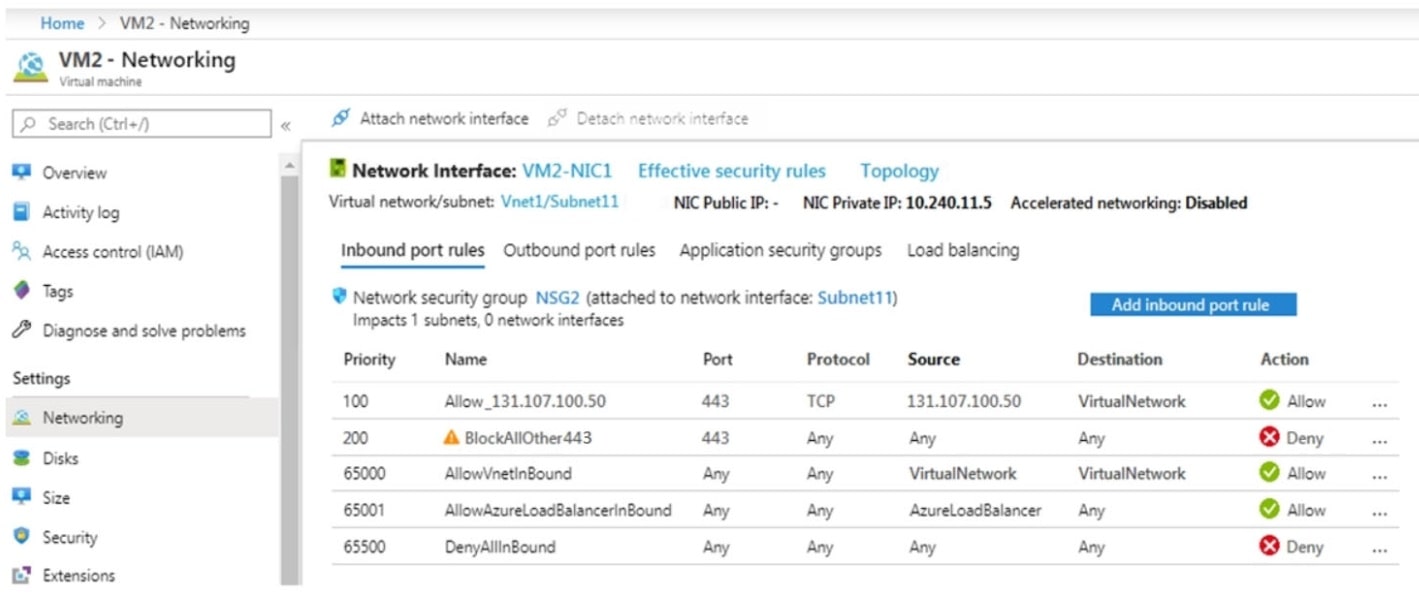
You discover that connections to App1 from 131.107.100.50 over TCP port 443 fail.
You verify that the Load Balancer rules are configured correctly.
You need to ensure that connections to App1 can be established successfully from 131.107.100.50 over TCP port 443.
Solution: You create an inbound security rule that allows any traffic from the AzureLoadBalancer source and has a cost of 150.
Does this meet the goal?
- A. Yes
- B. No
HOTSPOT
–
You have an Azure subscription that contains the resource groups shown in the following table.
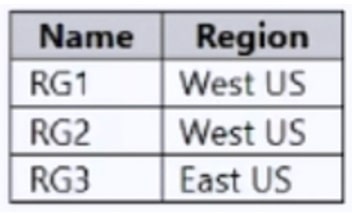
The subscription contains the virtual networks shown in the following table.

You plan to deploy the Azure Kubernetes Service (AKS) clusters shown in the following table.
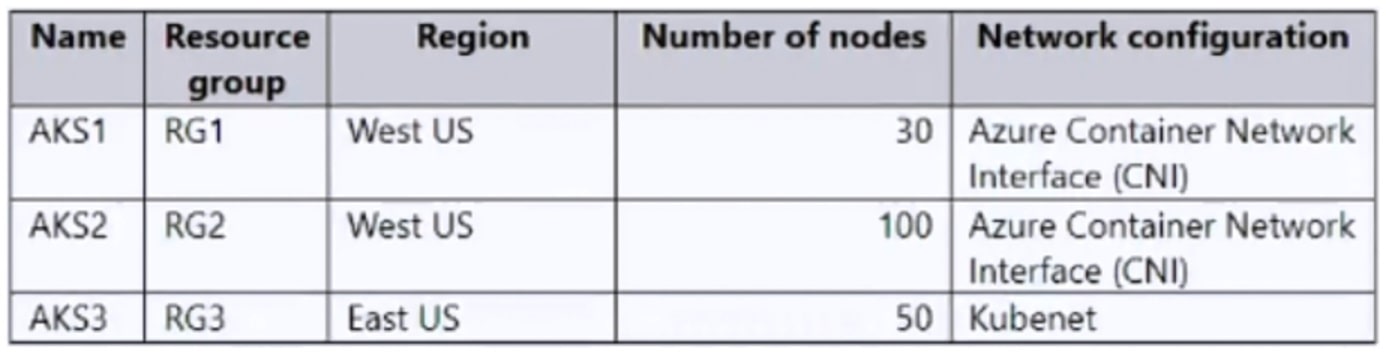
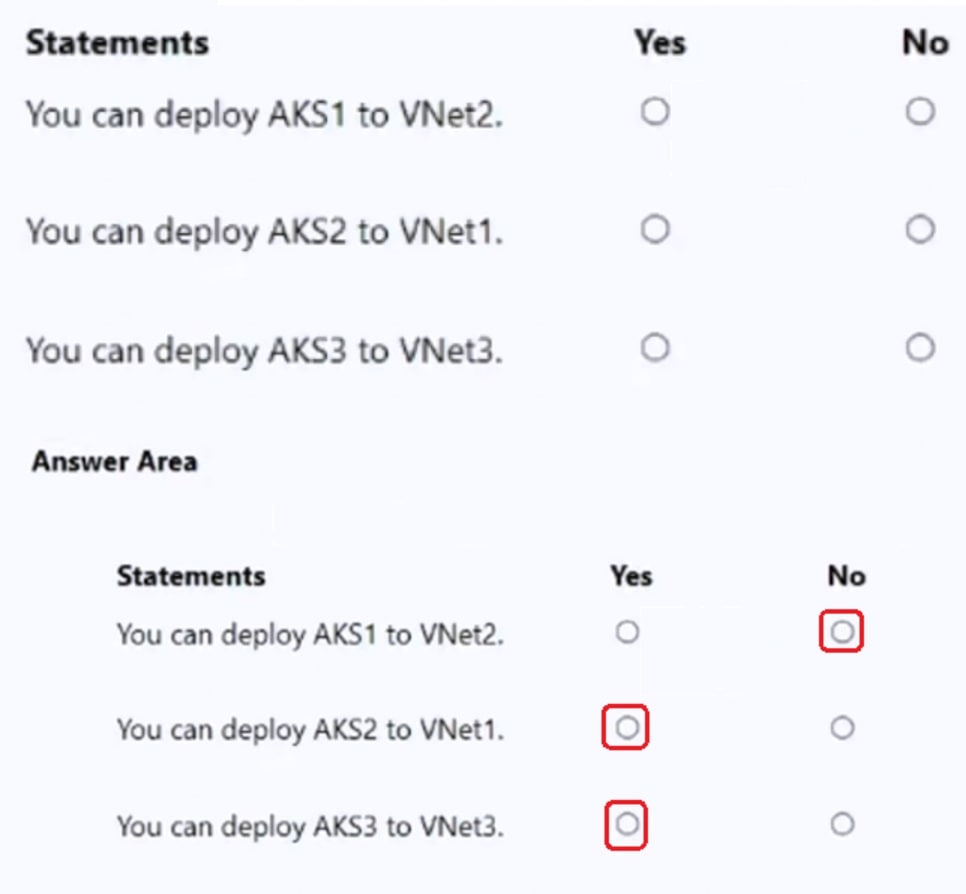
For each of the following statements, select Yes if the statement is true. Otherwise, select No.
NOTE: Each correct selection is worth one point.
Note: This question is part of a series of questions that present the same scenario. Each question in the series contains a unique solution that might meet the stated goals. Some questions sets might have more than one correct solution, while others might not have a correct solution.
After you answer a question in this section, you will NOT be able to return to it. As a result, these questions will not appear in the review screen.
You deploy an Azure Kubernetes Service (AKS) cluster named AKS1.
You need to deploy a YAML file to AKS1.
Solution: From Azure Cloud Shell, you run az aks.
Does this meet the goal?
- A. Yes
- B. No
You have an Azure subscription that contains a policy-based virtual network gateway named GW1 and a virtual network named VNet1.
You need to ensure that you can configure a point-to-site connection from an on-premises computer to VNet1.
Which two actions should you perform? Each correct answer presents part of the solution.
NOTE: Each correct selection is worth one point.
- A. Add a service endpoint to VNet1
- B. Reset GW1
- C. Create a route-based virtual network gateway
- D. Add a connection to GW1
- E. Delete GW1
- F. Add a public IP address space to VNet1
HOTSPOT –
You have an Azure subscription that contains the resources in the following table:
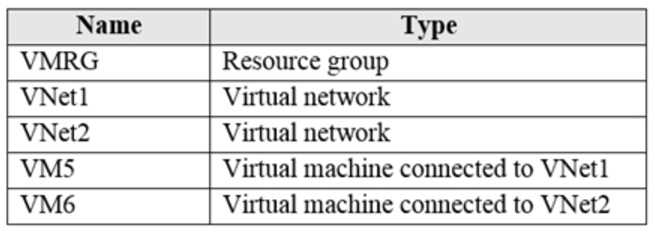
In Azure, you create a private DNS zone named adatum.com. You set the registration virtual network to VNet2. The adatum.com zone is configured as shown in the following exhibit:
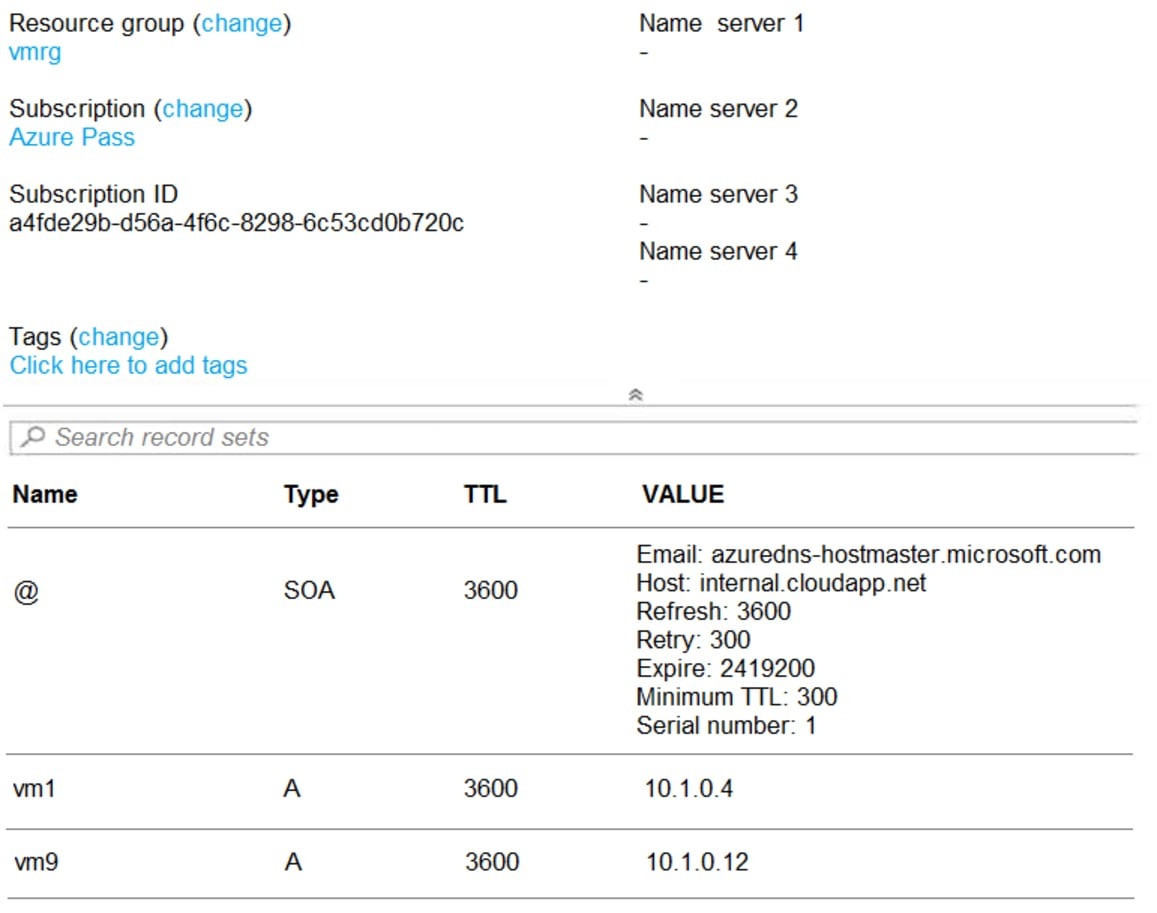
For each of the following statements, select Yes if the statement is true. Otherwise, select No.
NOTE: Each correct selection is worth one point.
Hot Area:
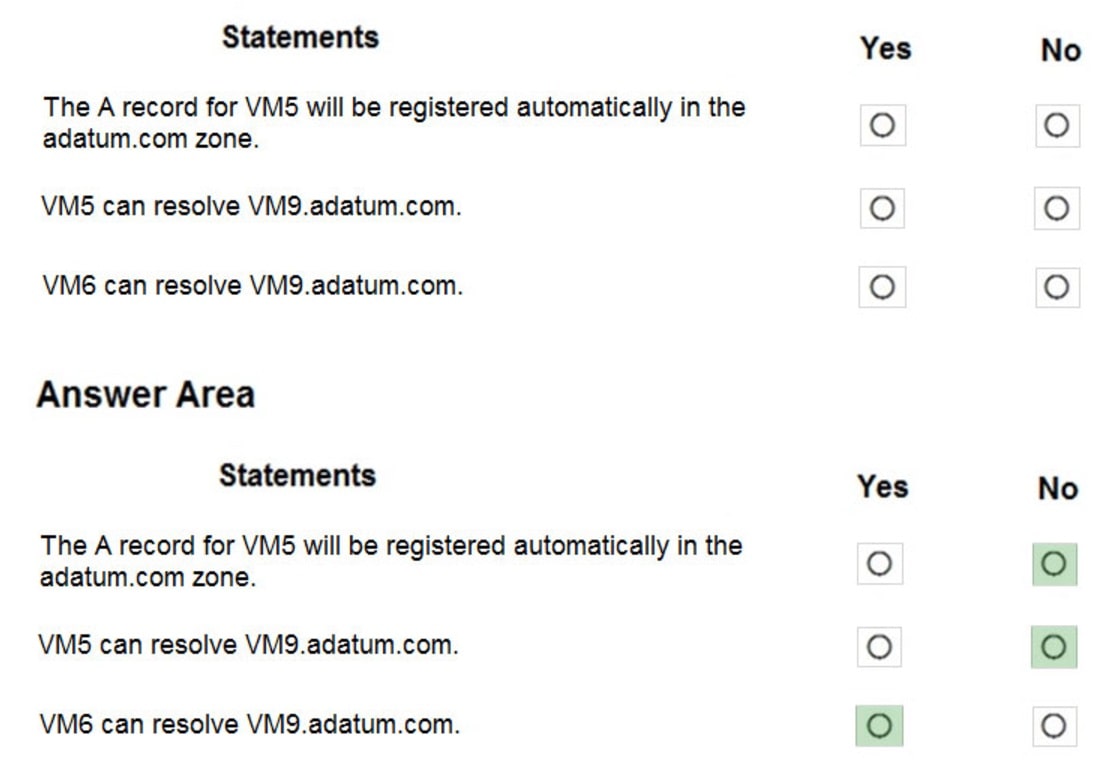
Box 1: No –
Azure DNS provides automatic registration of virtual machines from a single virtual network that’s linked to a private zone as a registration virtual network. VM5 does not belong to the registration virtual network though.
Box 2: No –
Forward DNS resolution is supported across virtual networks that are linked to the private zone as resolution virtual networks. VM5 does belong to a resolution virtual network.
Box 3: Yes –
VM6 belongs to registration virtual network, and an A (Host) record exists for VM9 in the DNS zone.
By default, registration virtual networks also act as resolution virtual networks, in the sense that DNS resolution against the zone works from any of the virtual machines within the registration virtual network.
Reference:
https://docs.microsoft.com/en-us/azure/dns/private-dns-overview