Pass Microsoft AZ-104 in Just 3 Days – Stress-Free, No Study Needed!
Have questions? Contact us directly on WhatsApp for quick support!
You have an Azure subscription that contains three virtual machines named VM1, VM2, and VM3. All the virtual machines are in an availability set named AVSet1.
You need to scale up VM1 to a new virtual machine size, but the intended size is unavailable.
What should you do first?
- A. Create a proximity placement group.
- B. Deallocate VM1.
- C. Convert AvSet1 into a managed availability set.
- D. Shut down VM3 and VM3.
You have a virtual network named VNet1 as shown in the exhibit. (Click the Exhibit tab.)
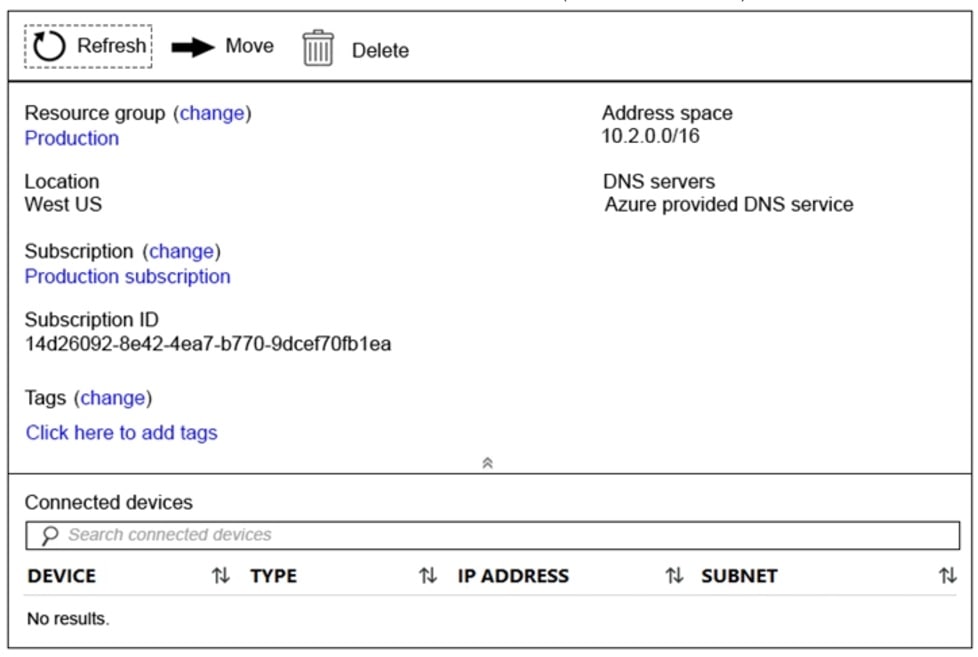
No devices are connected to VNet1.
You plan to peer VNet1 to another virtual network named VNet2. VNet2 has an address space of 10.2.0.0/16.
You need to create the peering.
What should you do first?
- A. Modify the address space of VNet1.
- B. Add a gateway subnet to VNet1.
- C. Create a subnet on VNet1 and VNet2.
- D. Configure a service endpoint on VNet2.
You need to create an Azure Storage account named storage1. The solution must meet the following requirements:
• Support Azure Data Lake Storage.
• Minimize costs for infrequently accessed data.
• Automatically replicate data to a secondary Azure region.
Which three options should you configure for storage1? Each correct answer presents part of the solution.
NOTE: Each correct answer is worth one point.
- A. zone-redundant storage (ZRS)
- B. the Cool access tire
- C. geo-redundant storage (GRS)
- D. the Hot access tier
- E. hierarchical namespace
HOTSPOT
–
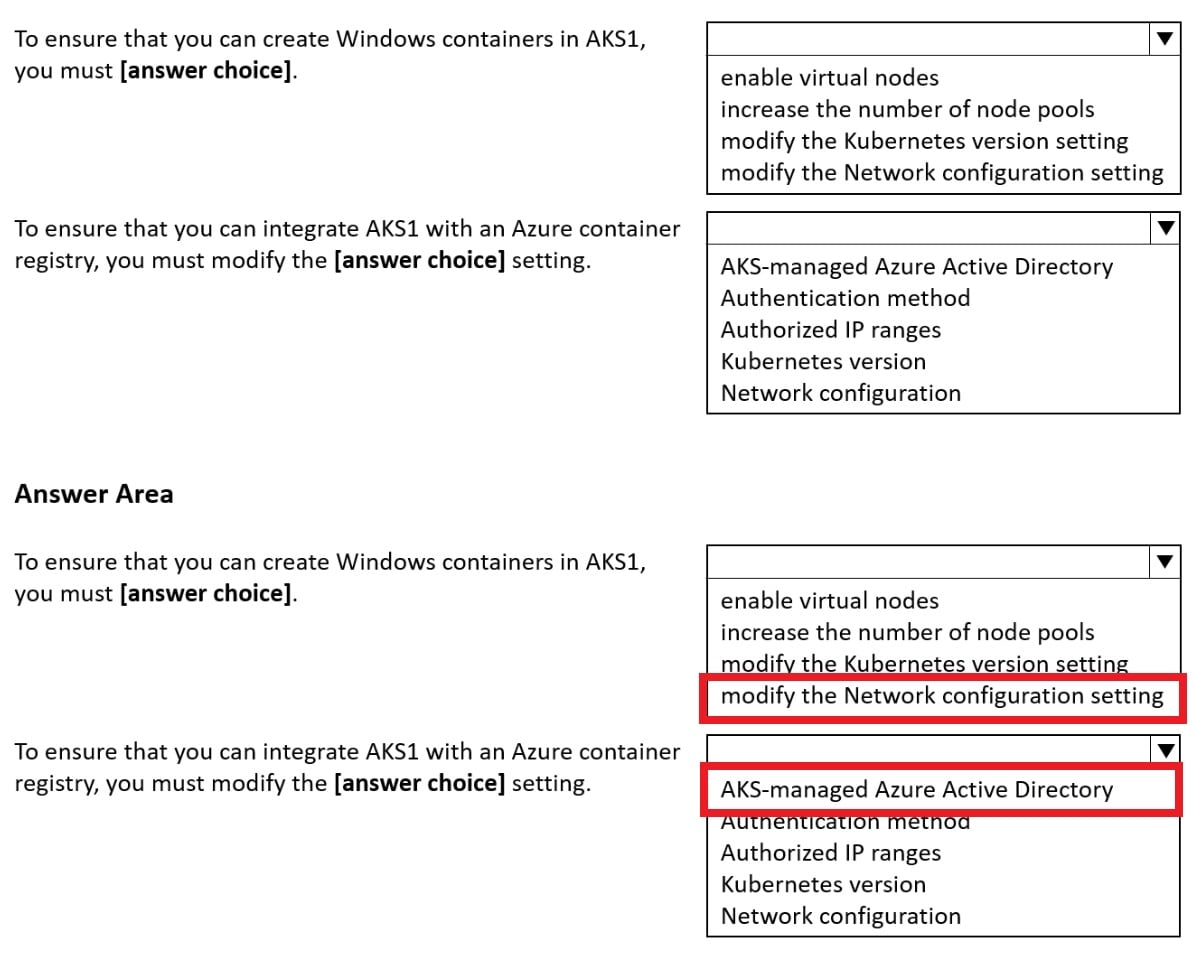
You are creating an Azure Kubernetes Services (AKS) cluster as shown in the following exhibit.
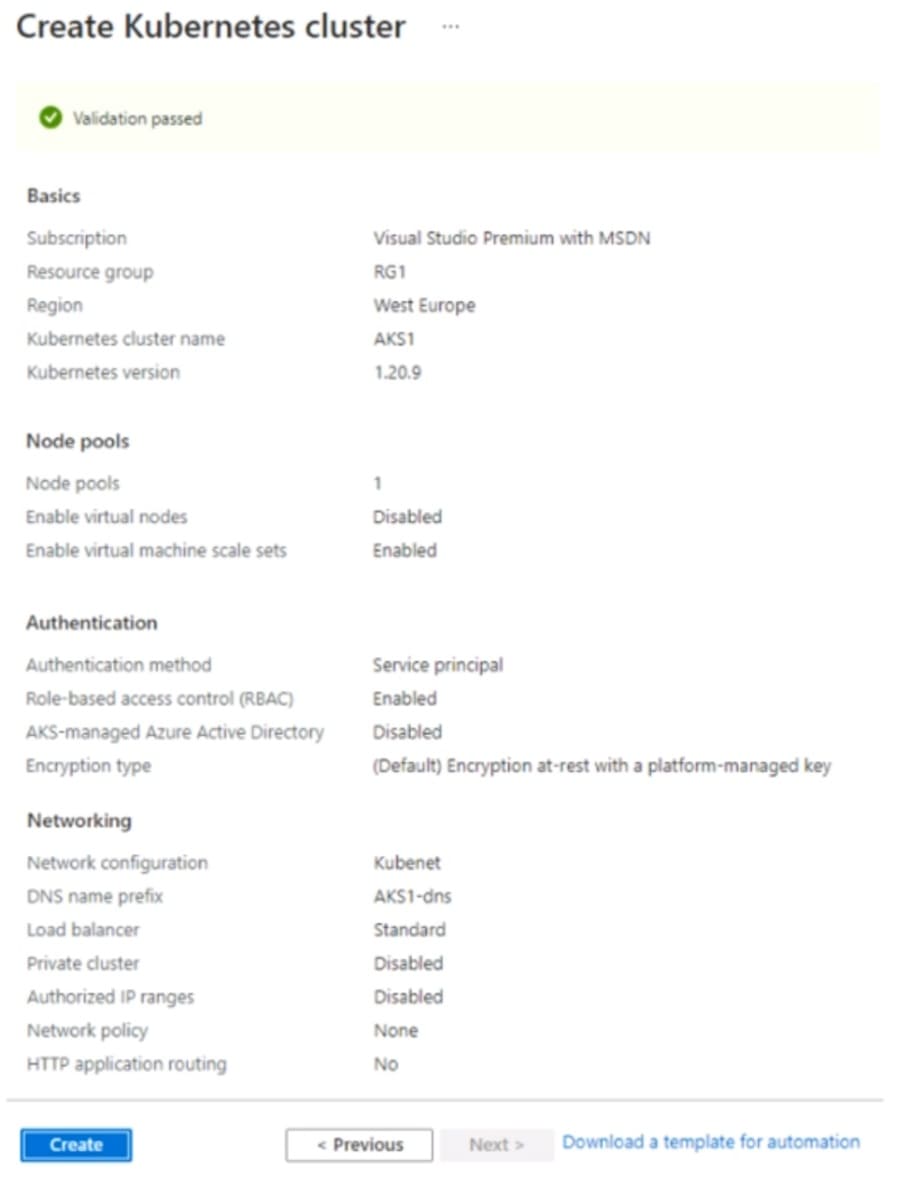
Use the drop-down menus to select the answer choice that completes each statement based on the information presented in the graphic.
NOTE: Each correct selection is worth one point.
You have the Azure virtual machines shown in the following table.
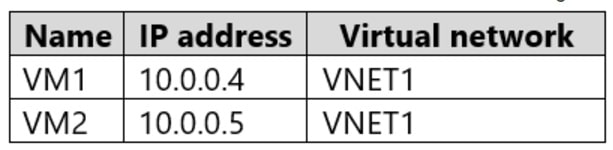
VNET1 is linked to a private DNS zone named contoso.com that contains the records shown in the following table.
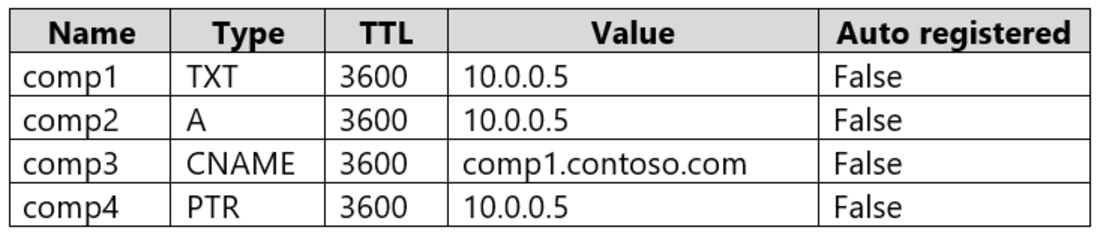
You need to ping VM2 from VM1.
Which DNS names can you use to ping VM2?
- A. comp2.contoso.com and comp4.contoso.com only
- B. comp1.contoso.com, comp2.contoso.com, comp3.contoso.com, and comp4.contoso.com
- C. comp2.contoso.com only
- D. comp1.contoso.com and comp2.contoso.com only
- E. comp1.contoso.com, comp2.contoso.com, and comp4.contoso.com only
HOTSPOT
–
You have an Azure Storage account named storage1 that contains two containers named container1 and container2. Blob versioning is enabled for both containers.
You periodically take blob snapshots of critical blobs.
You create the following lifecycle management policy.
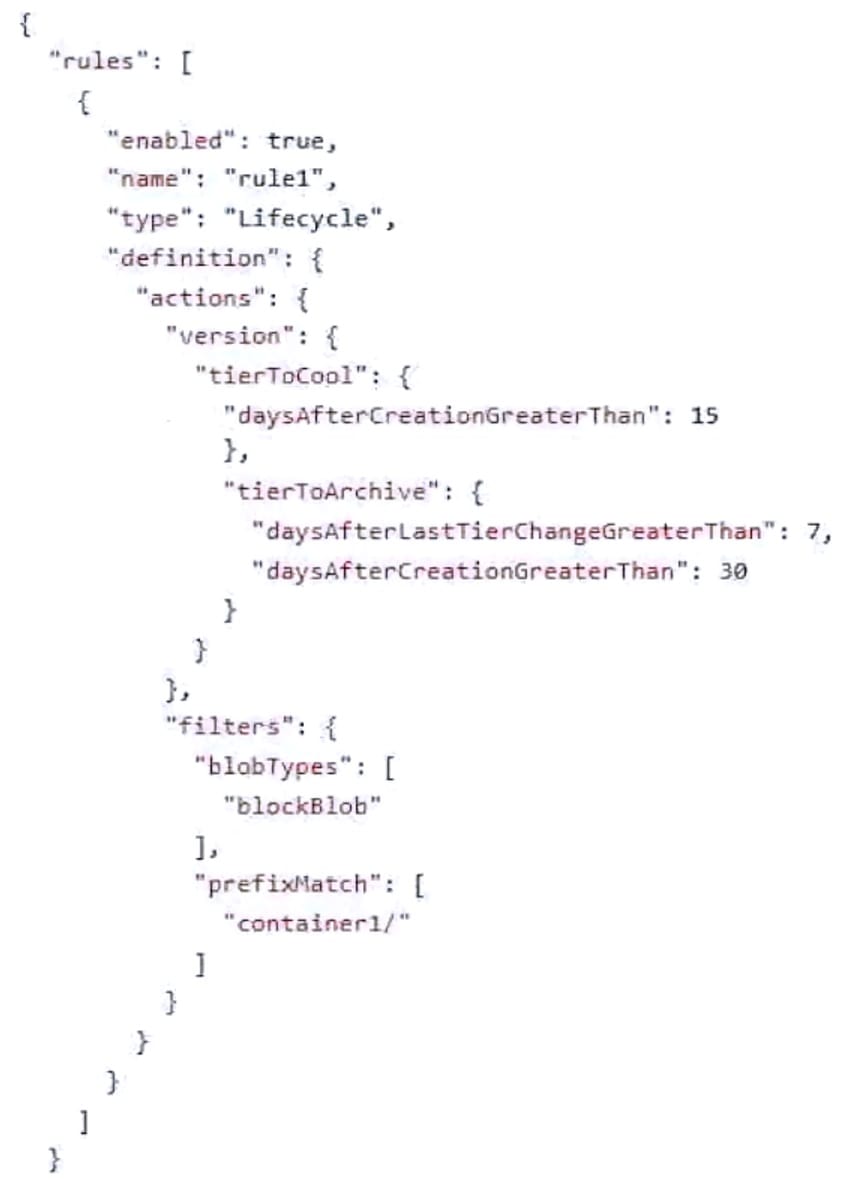
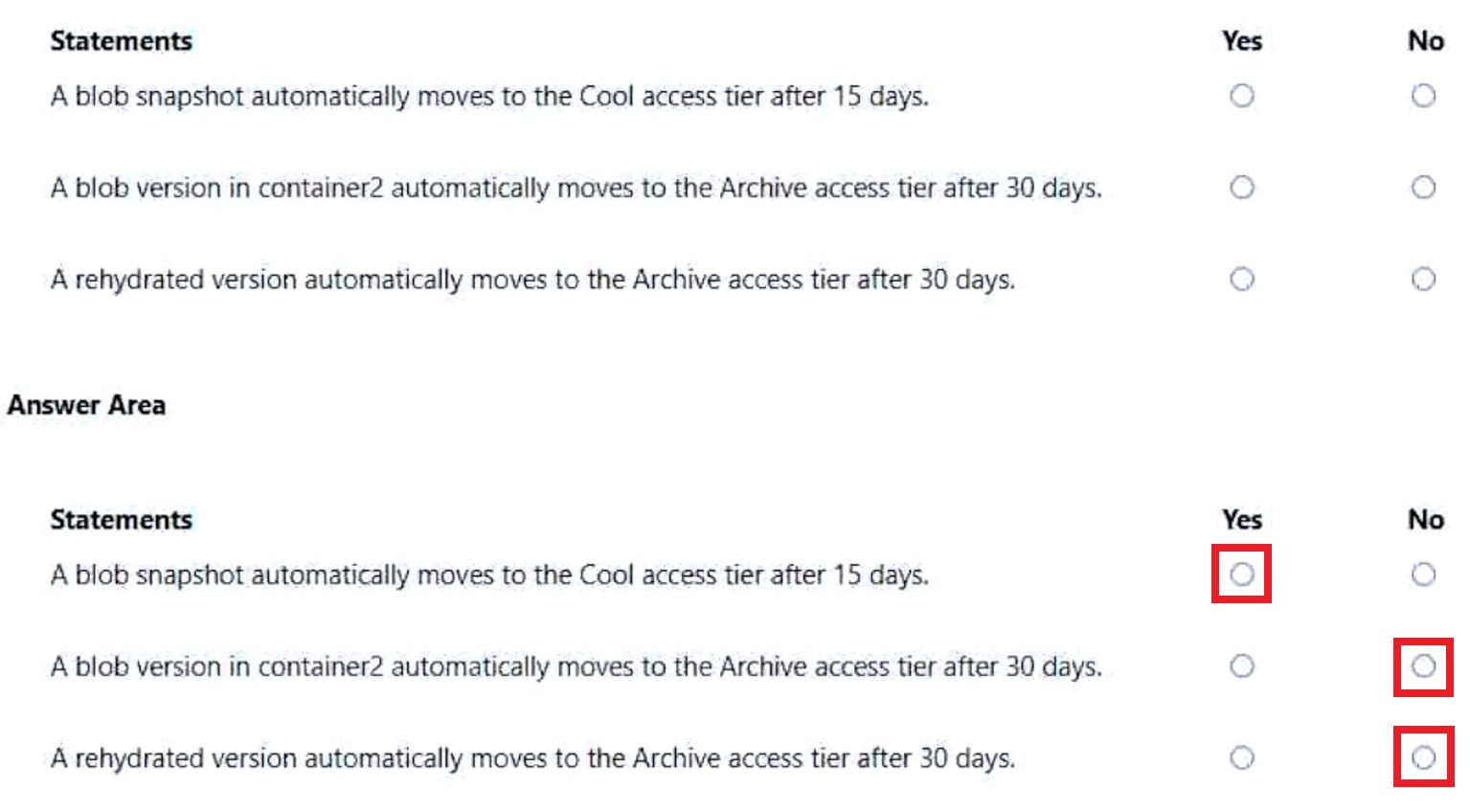
For each of the following statements, select Yes if the statement is true. Otherwise, select No.
NOTE: Each correct selection is worth one point.
HOTSPOT
–
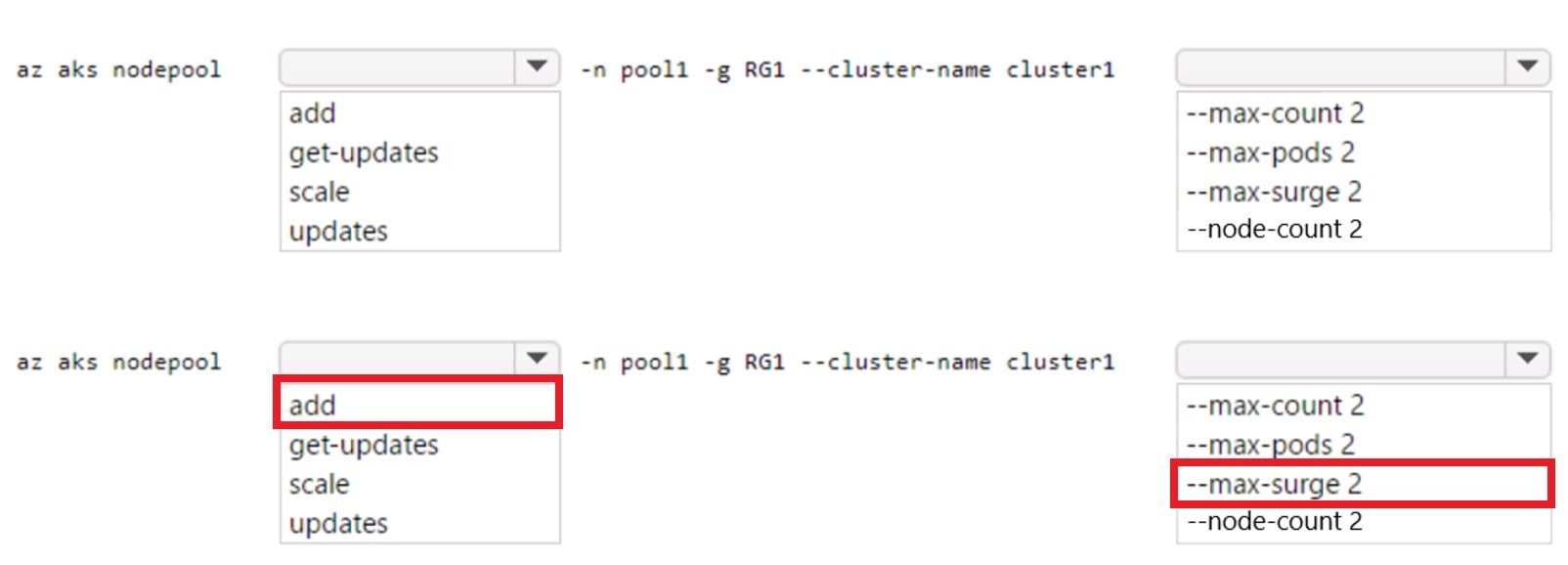
You have an Azure subscription that contains an Azure Kubernetes Service (AKS) cluster named Cluster1. Cluster1 hosts a node pool named Pool1 that has four nodes.
You need to perform a coordinated upgrade of Cluster1. The solution must meet the following requirements:
• Deploy two new nodes to perform the upgrade.
• Minimize costs.
How should you complete the command? To answer, select the appropriate options in the answer area.
NOTE: Each correct selection is worth one point.
HOTSPOT –
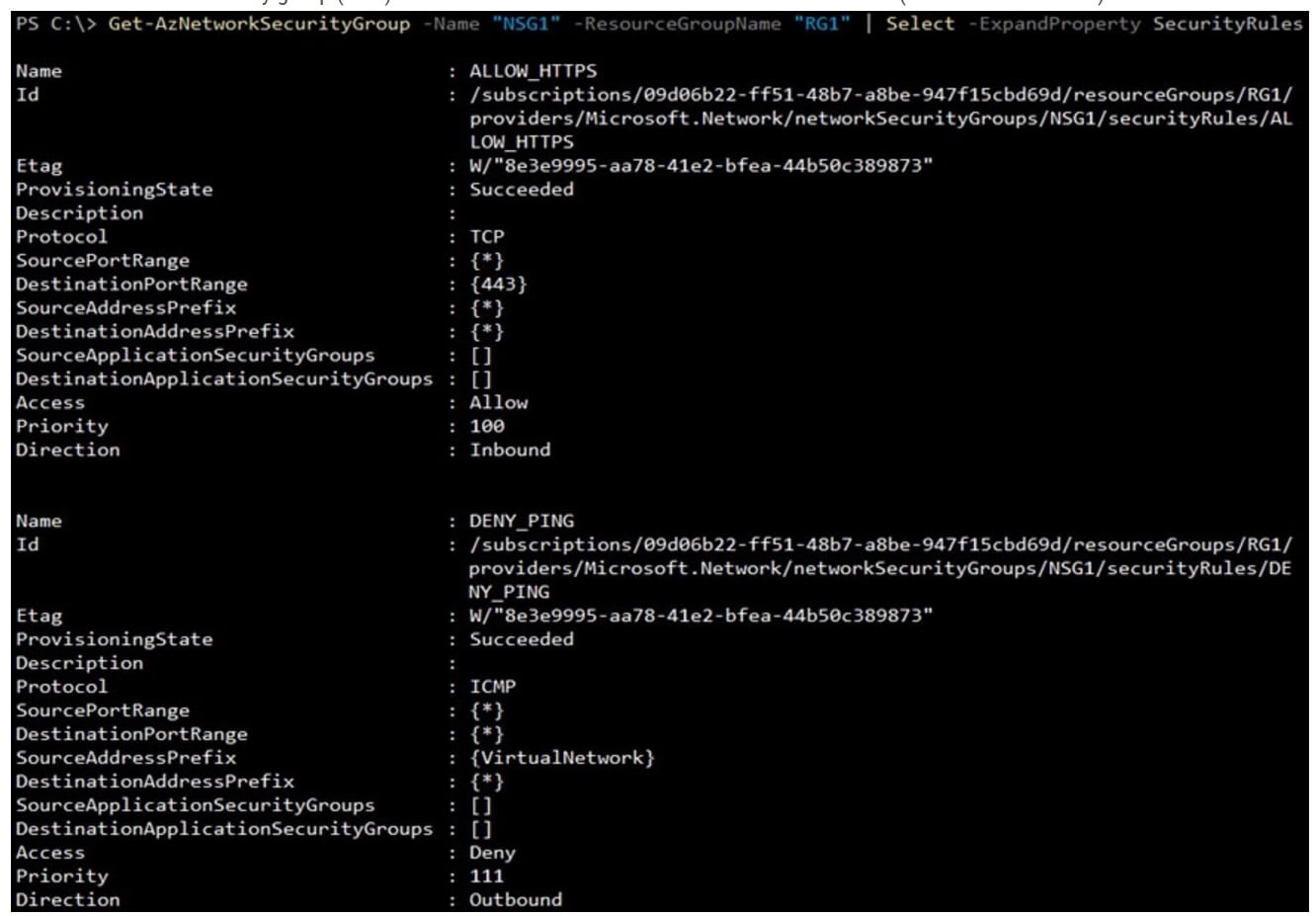
You have a network security group (NSG) named NSG1 that has the rules defined in the exhibit. (Click the Exhibit tab.)
NSG1 is associated to a subnet named Subnet1. Subnet1 contains the virtual machines shown in the following table.

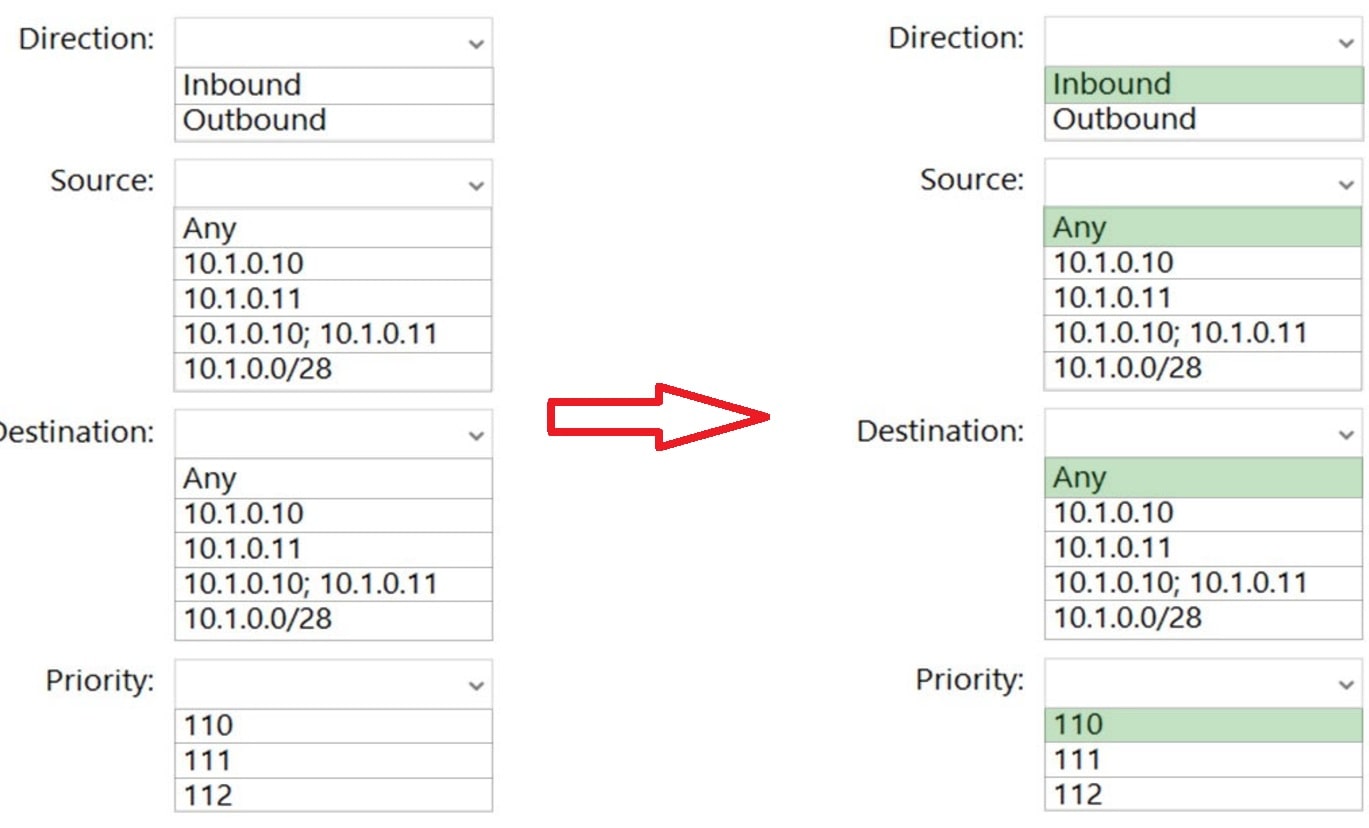
You need to add a rule to NSG1 to ensure that VM1 can ping VM2. The solution must use the principle of least privilege.
How should you configure the rule? To answer, select the appropriate options in the answer area.
NOTE: Each correct selection is worth one point.
Hot Area:
You have an Azure subscription named Subscription1 that contains virtual network named VNet1. VNet1 is in a resource group named RG1.
A user named User1 has the following roles for Subscription1:
• Reader
• Security Admin
• Security Reader
You need to ensure that User1 can assign the Reader role for VNet1 to other users.
What should you do?
- A. Assign User1 the Contributor role for VNet1.
- B. Assign User1 the Network Contributor role for VNet1.
- C. Assign User1 the User Access Administrator role for VNet1.
- D. Remove User1 from the Security Reader and Reader roles for Subscription1. Assign User1 the Contributor role for Subscription1.
HOTSPOT
–
You have an Azure subscription.
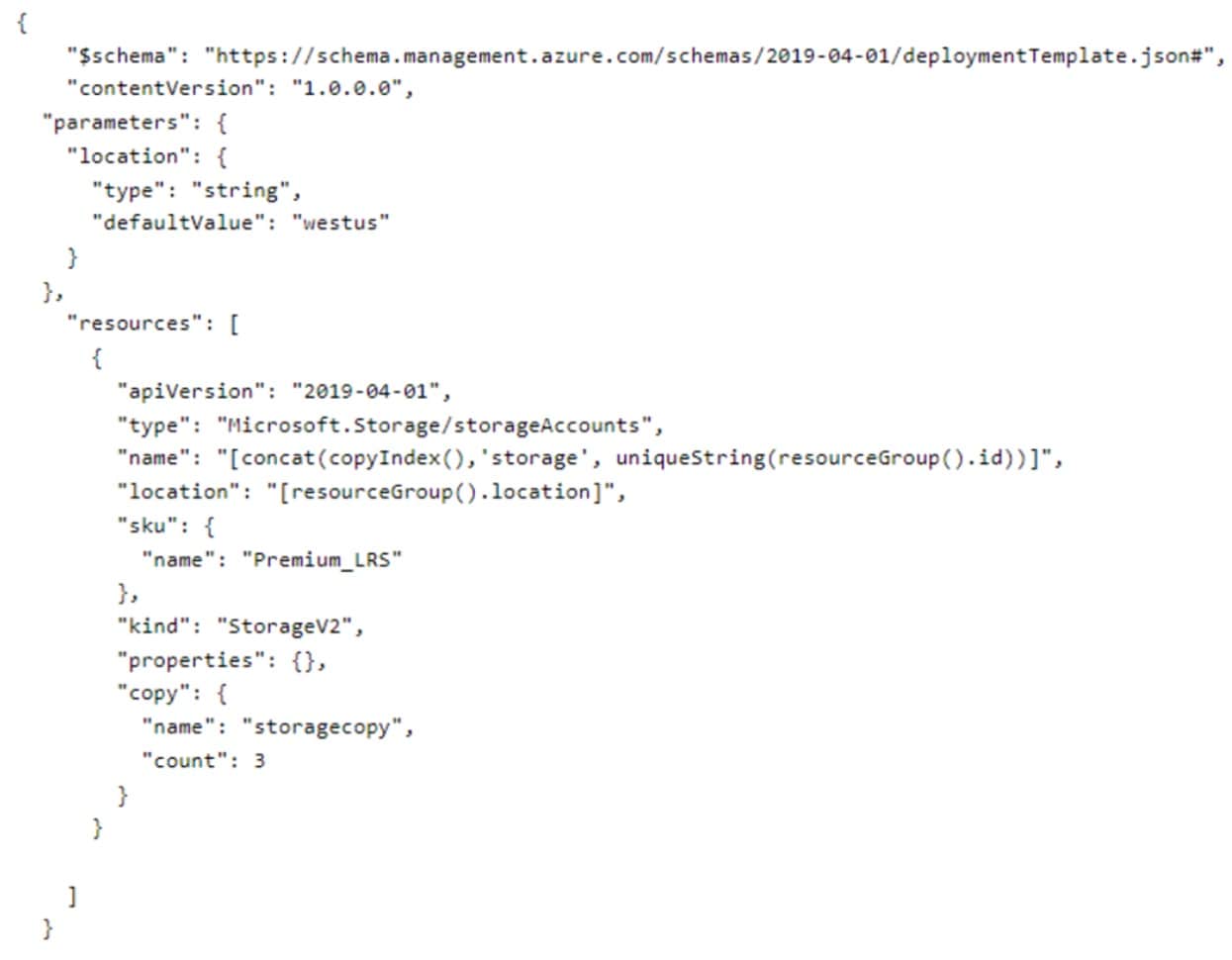
You create the following file named Deploy.json.
You connect to the subscription and run the following commands.

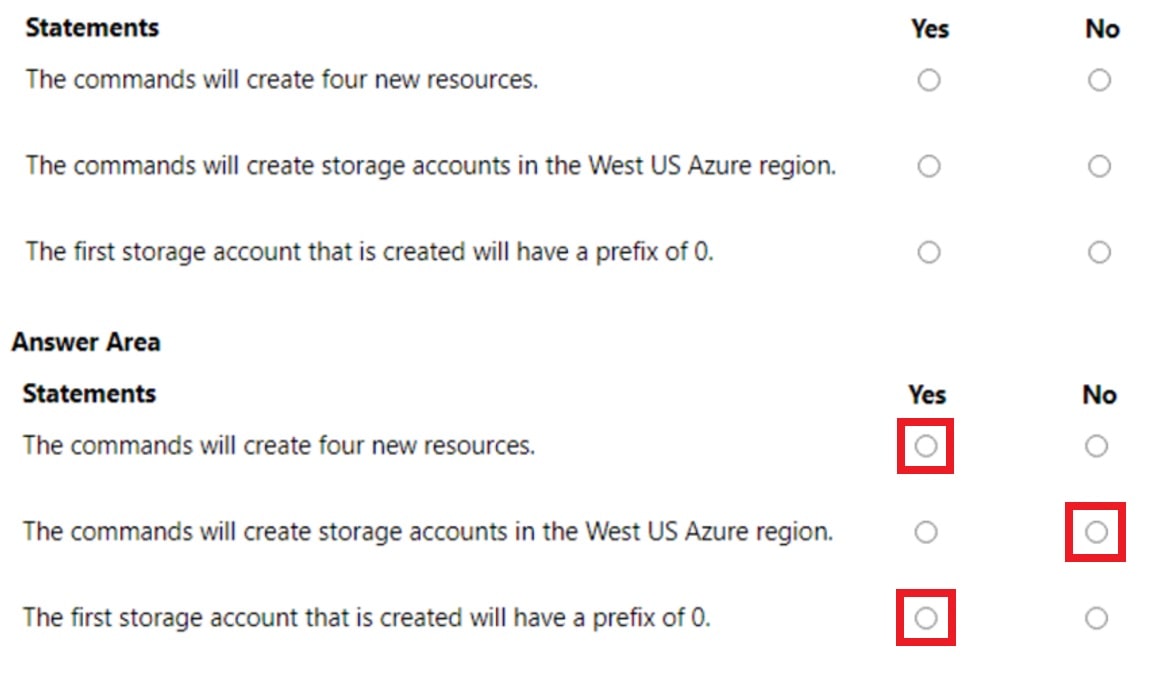
For each of the following statements, select Yes if the statement is true. Otherwise, select No.
NOTE: Each correct selection is worth one point.