Pass Microsoft AZ-104 in Just 3 Days – Stress-Free, No Study Needed!
Have questions? Contact us directly on WhatsApp for quick support!
Note: This question is part of a series of questions that present the same scenario. Each question in the series contains a unique solution that might meet the stated goals. Some question sets might have more than one correct solution, while others might not have a correct solution.
After you answer a question in this section, you will NOT be able to return to it. As a result, these questions will not appear in the review screen.
You have a computer named Computer1 that has a point-to-site VPN connection to an Azure virtual network named VNet1. The point-to-site connection uses a self-signed certificate.
From Azure, you download and install the VPN client configuration package on a computer named Computer2.
You need to ensure that you can establish a point-to-site VPN connection to VNet1 from Computer2.
Solution: On Computer2, you set the Startup type for the IPSec Policy Agent service to Automatic.
Does this meet the goal?
- A. Yes
- B. No
You have an Azure subscription named Subscription1 that contains virtual network named VNet1. VNet1 is in a resource group named RG1.
User named User1 has the following roles for Subscription1:
• Reader
• Security Admin
• Security Reader
You need to ensure that User1 can assign the Reader role for VNet1 to other users.
What should you do?
- A. Remove User1 from the Security Reader and Reader roles for Subscription1. Assign User1 the Contributor role for Subscription1.
- B. Remove User1 from the Security Reader role for Subscription1. Assign User1 the Contributor role for RG1.
- C. Assign User1 the Network Contributor role for VNet1.
- D. Assign User1 the User Access Administrator role for VNet1.
You have an Azure subscription that contains the devices shown in the following table.
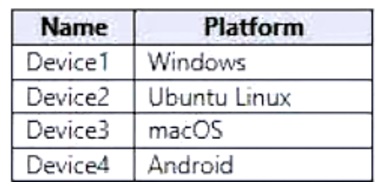
On which devices can you install Azure Storage Explorer?
- A. Device1 only
- B. Device1 and Device2 only
- C. Device1 and Device3 only
- D. Device1, Device2, and Device3 only
- E. Device1, Device3, and Device4 only
Note: This question is part of a series of questions that present the same scenario. Each question in the series contains a unique solution that might meet the stated goals. Some question sets might have more than one correct solution, while others might not have a correct solution.
After you answer a question in this section, you will NOT be able to return to it. As a result, these questions will not appear in the review screen.
You have an Azure container registry named Registry1 that contains an image named image1.
You receive an error message when you attempt to deploy a container instance by using image1.
You need to be able to deploy a container instance by using image1.
Solution: You set Admin user to Enable for Registry1.
Does this meet the goal?
- A. Yes
- B. No
You have five Azure virtual machines that run Windows Server 2016. The virtual machines are configured as web servers.
You have an Azure load balancer named LB1 that provides load balancing services for the virtual machines.
You need to ensure that visitors are serviced by the same web server for each request.
What should you configure?
- A. Session persistence to Client IP and protocol
- B. Protocol to UDP
- C. Session persistence to None
- D. Floating IP (direct server return) to Enabled
HOTSPOT –
You have an Azure subscription.
You plan to create the Azure Storage account as shown in the following exhibit.
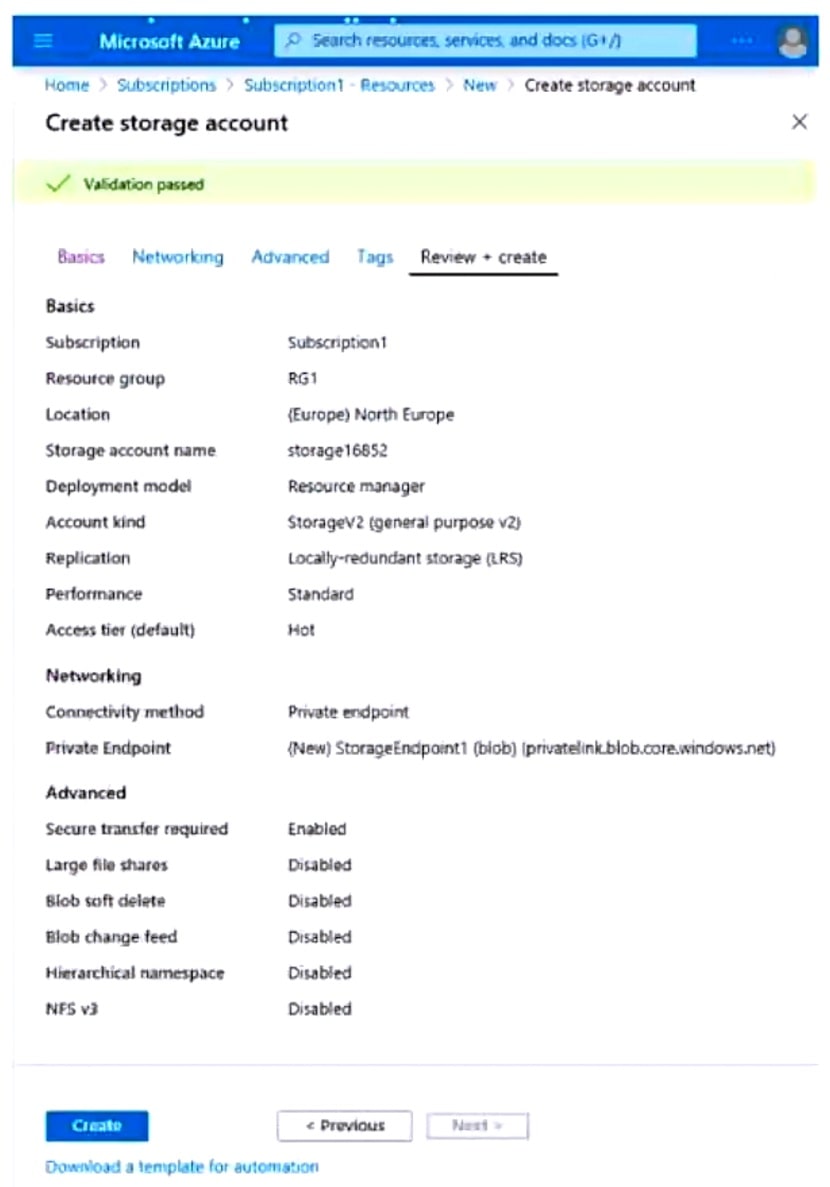
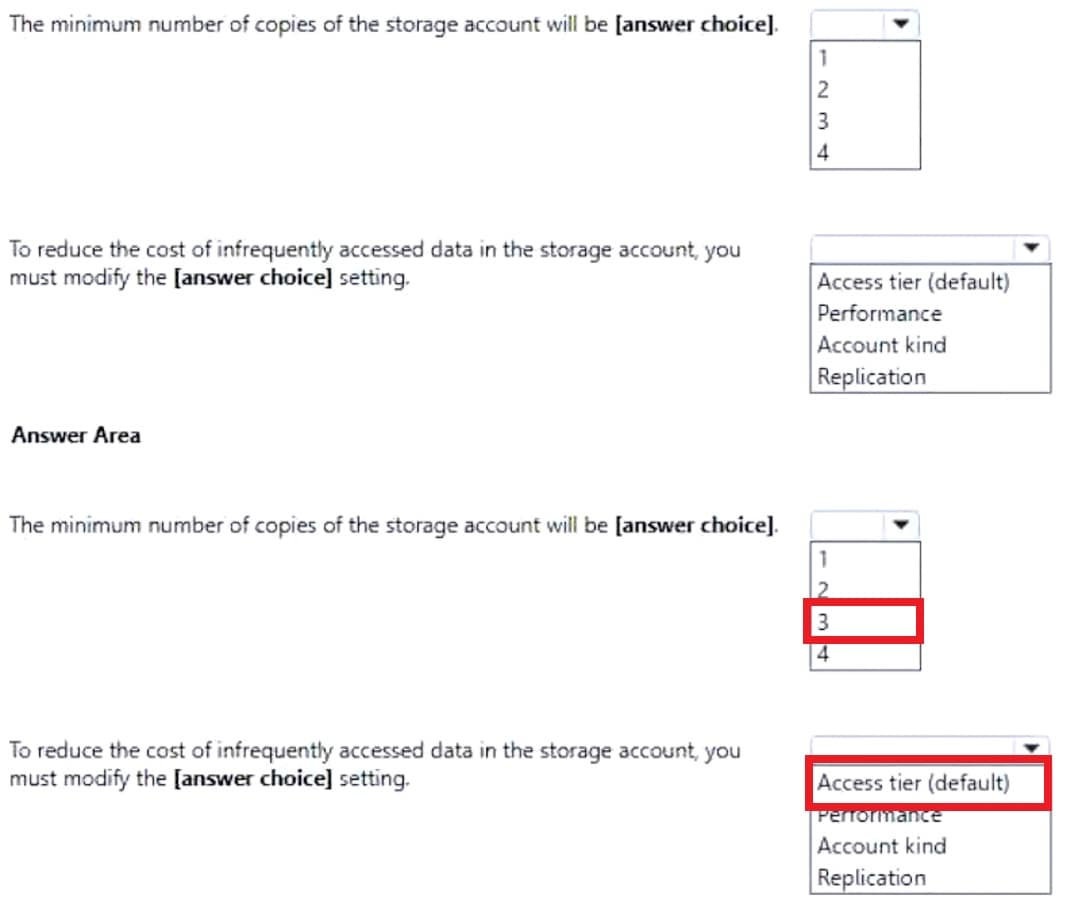
Use the drop-down menus to select the answer choice that completes each statement based on the information presented in the graphic.
NOTE: Each correct selection is worth one point.
HOTSPOT
–
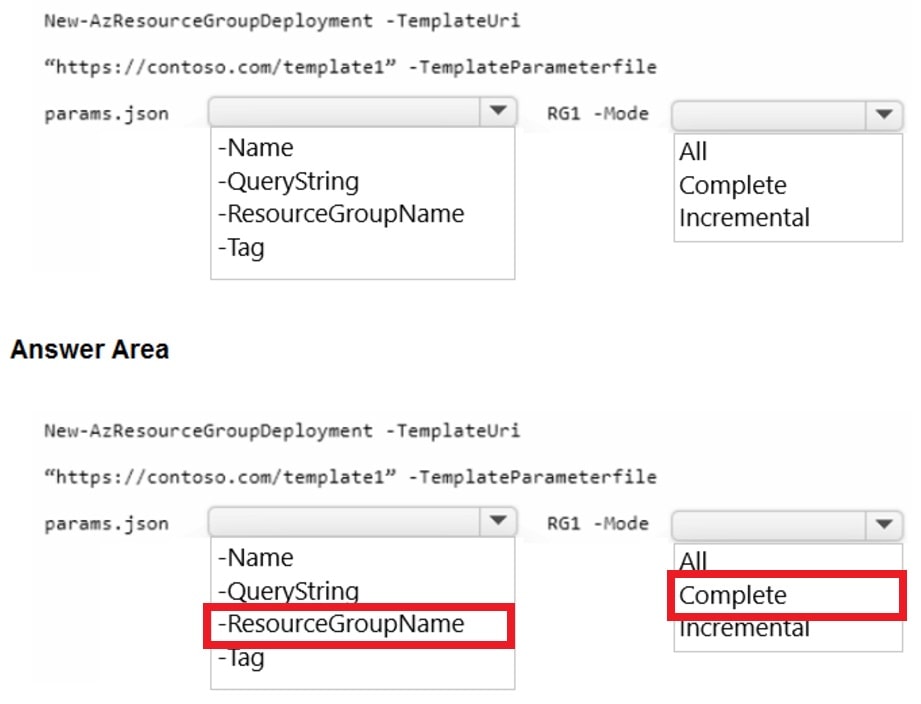
You have an Azure subscription that contains a resource group named RG1.
You plan to use an Azure Resource Manager (ARM) template named template1 to deploy resources. The solution must meet the following requirements:
• Deploy new resources to RG1.
• Remove all the existing resources from RG1 before deploying the new resources.
How should you complete the command? To answer, select the appropriate options in the answer area.
NOTE: Each correct selection is worth one point.
You have an Azure subscription that uses the public IP addresses shown in the following table.
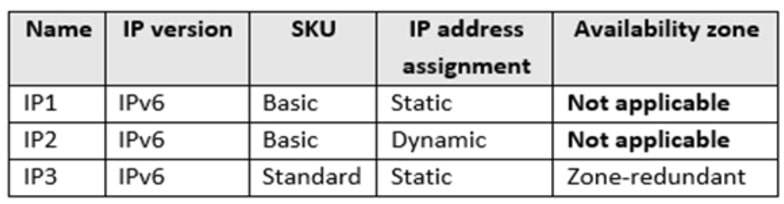
You need to create a public Azure Standard Load Balancer.
Which public IP addresses can you use?
- A. IP1, IP2, and IP3
- B. IP2 only
- C. IP3 only
- D. IP1 and IP3 only
HOTSPOT
–
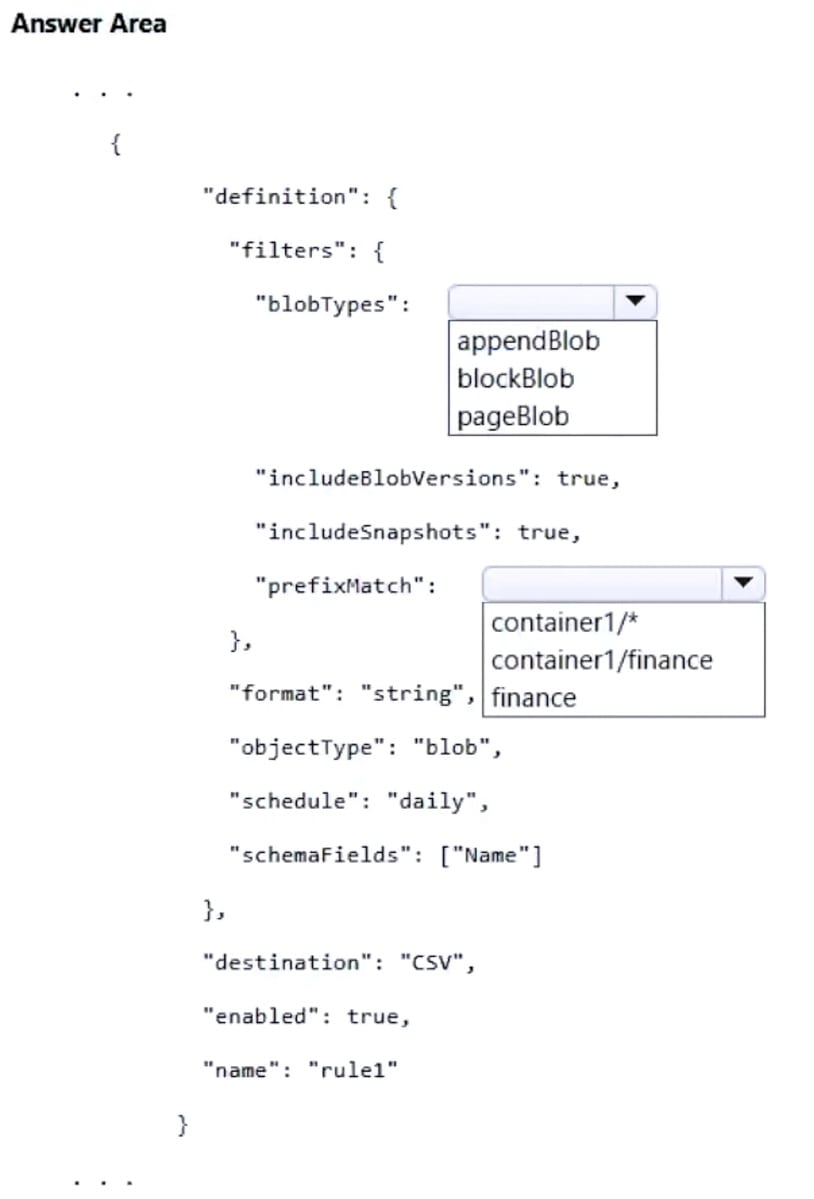
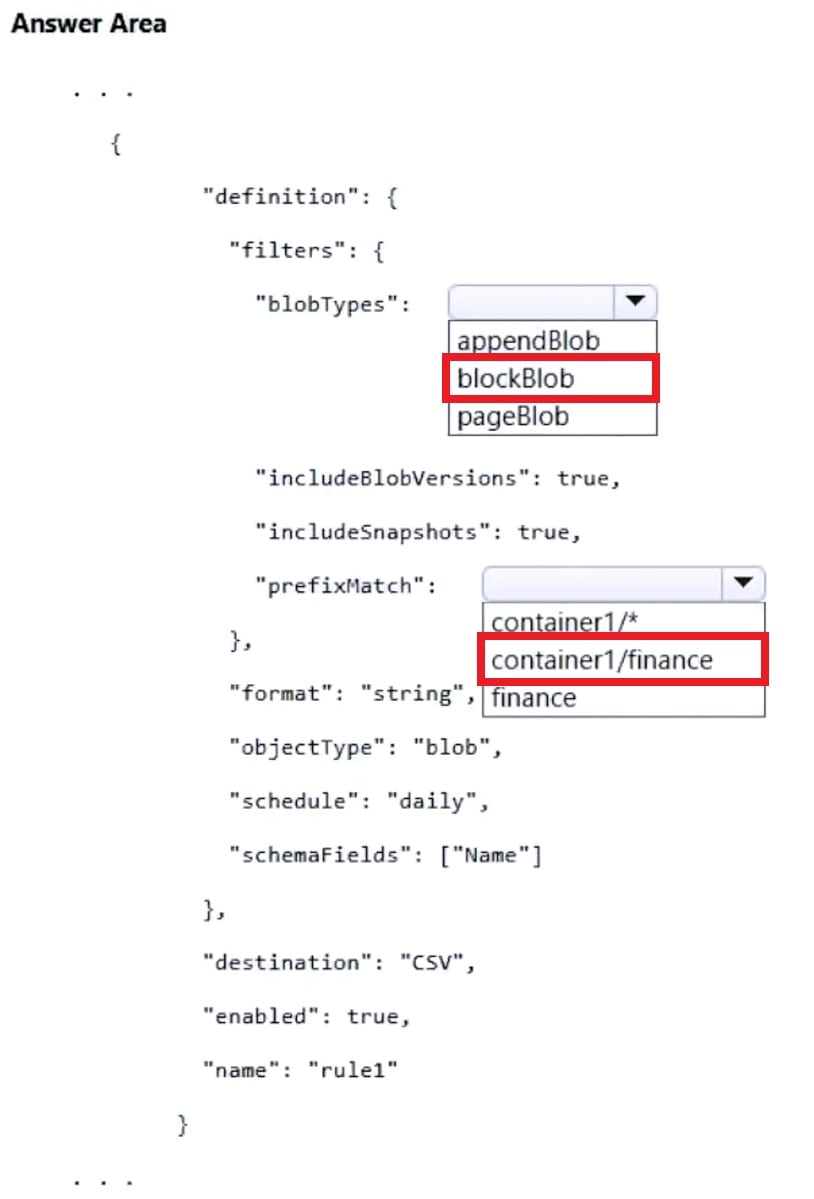
You have an Azure Storage account named storage1 that contains a container named container1. The container1 container stores thousands of image files.
You plan to use an Azure Resource Manager (ARM) template to create a blob inventory rule named rule1.
You need to ensure that only blobs whose names start with the word finance are stored daily as a CSV file in container1.
How should you complete rule1? To answer, select the options in the answer area.
NOTE: Each correct answer is worth one point.
HOTSPOT
–
You have an Azure App Service web app named app1.
You configure autoscaling as shown in following exhibit.
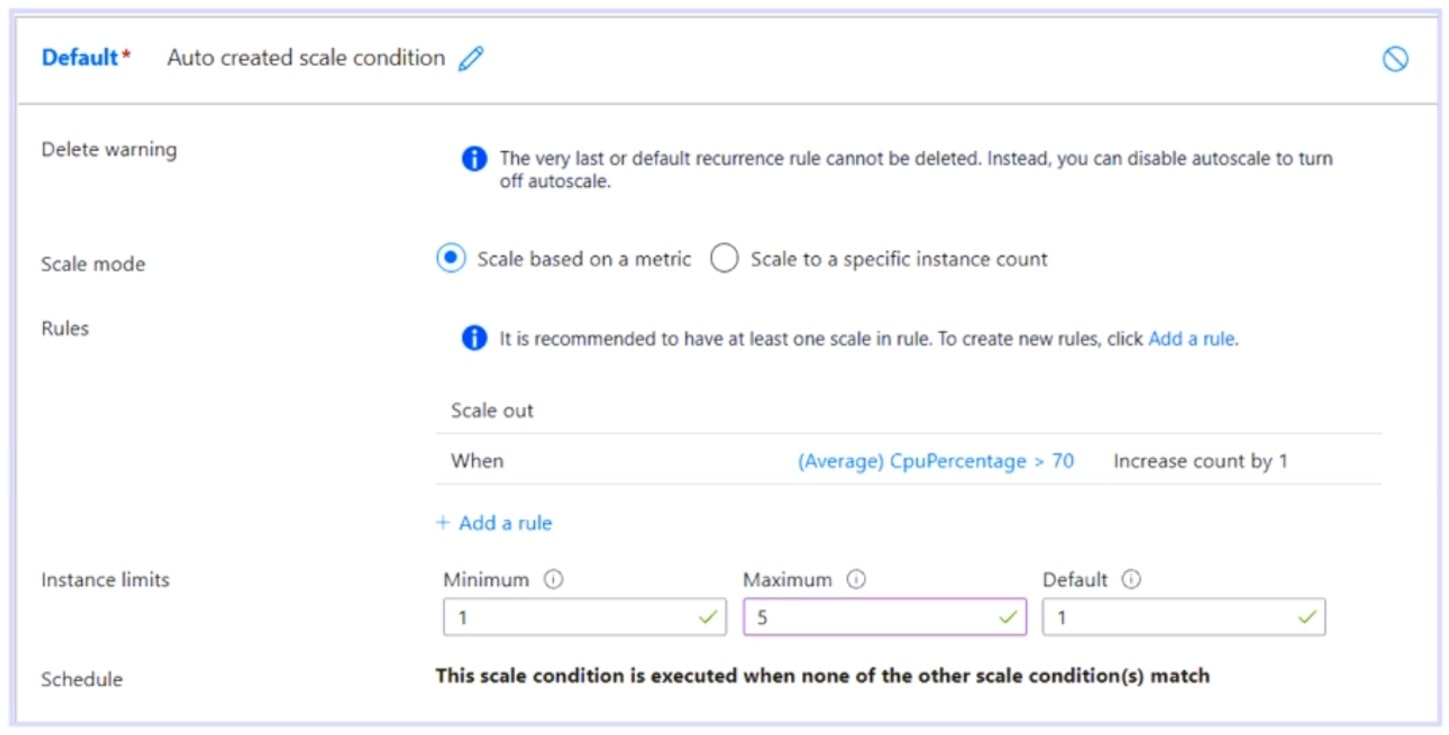
You configure the autoscale rule criteria as shown in the following exhibit.
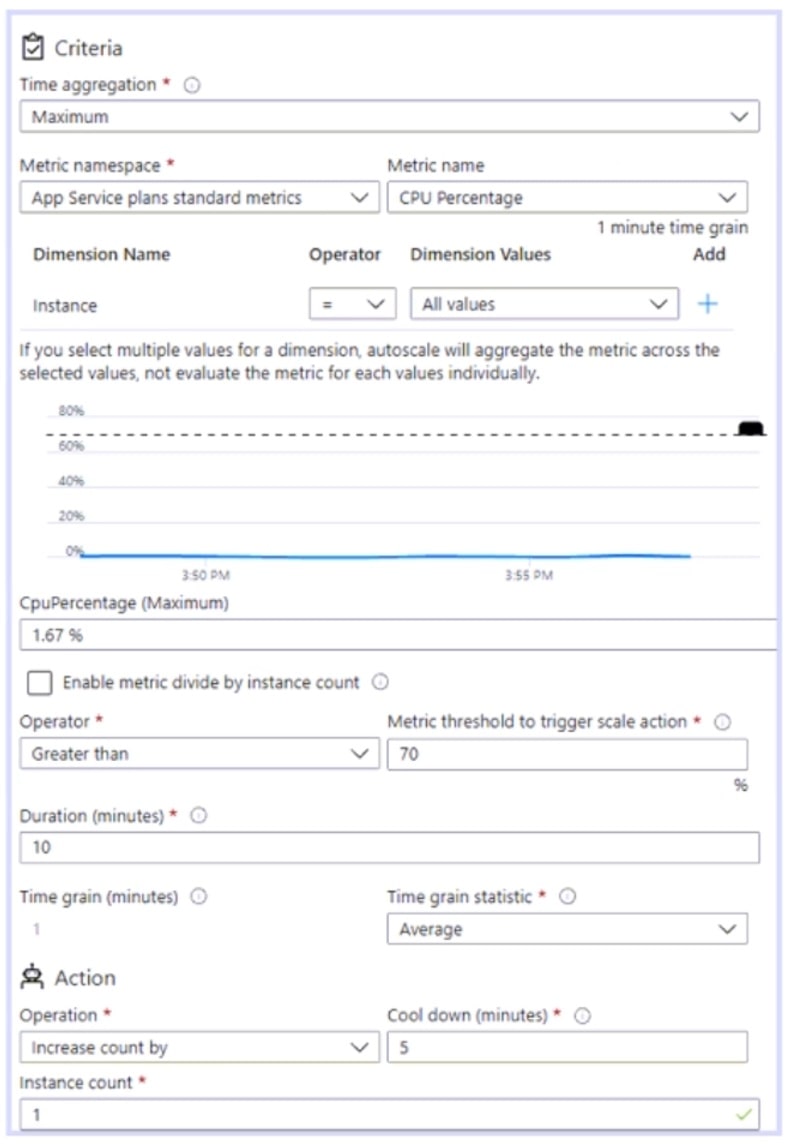
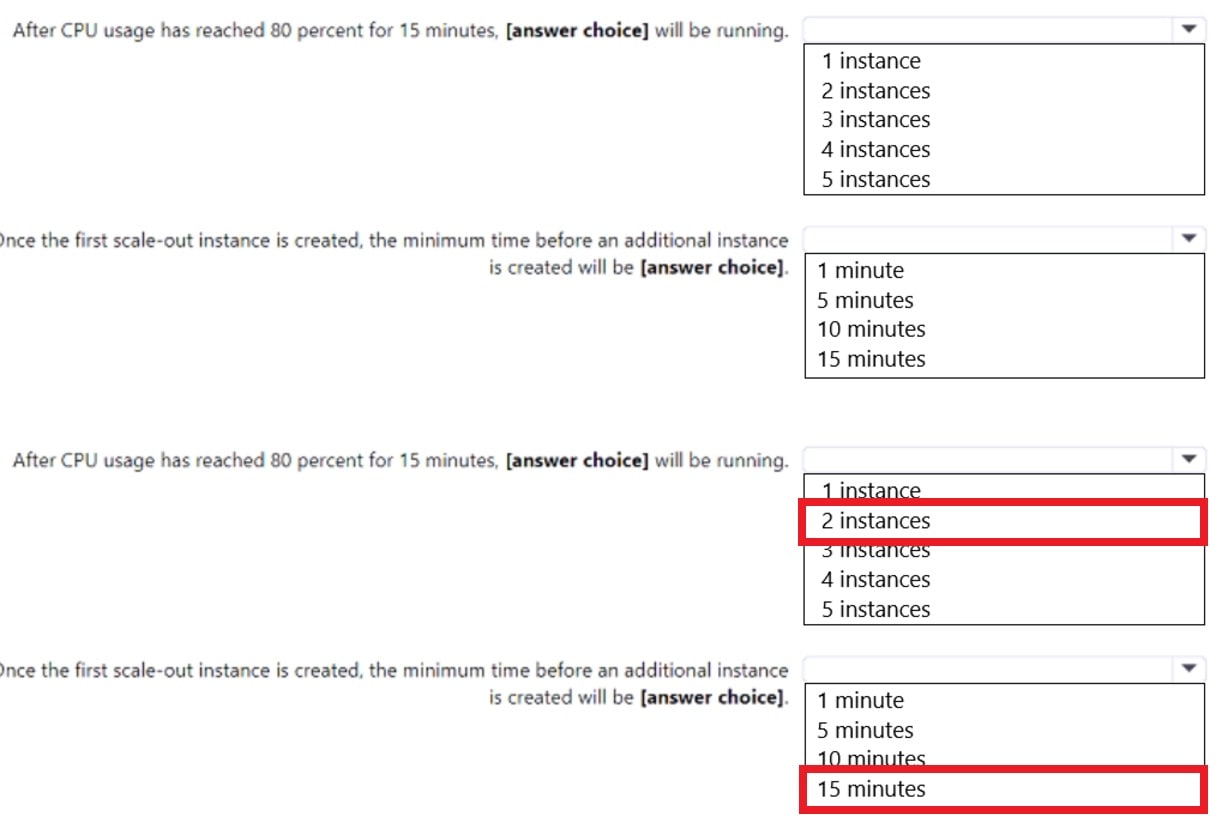
Use the drop-down menus to select the answer choice that answers each question based on the information presented in the graphic.
NOTE: Each correct selection is worth one point.