

Pass Microsoft AZ-104 in Just 3 Days – Stress-Free, No Study Needed!
Have questions? Contact us directly on WhatsApp for quick support!
Note: This question is part of a series of questions that present the same scenario. Each question in the series contains a unique solution that might meet the stated goals. Some question sets might have more than one correct solution, while others might not have a correct solution.
After you answer a question in this section, you will NOT be able to return to it. As a result, these questions will not appear in the review screen.
You have an app named App1 that is installed on two Azure virtual machines named VM1 and VM2. Connections to App1 are managed by using an Azure Load Balancer.
The effective network security configurations for VM2 are shown in the following exhibit.
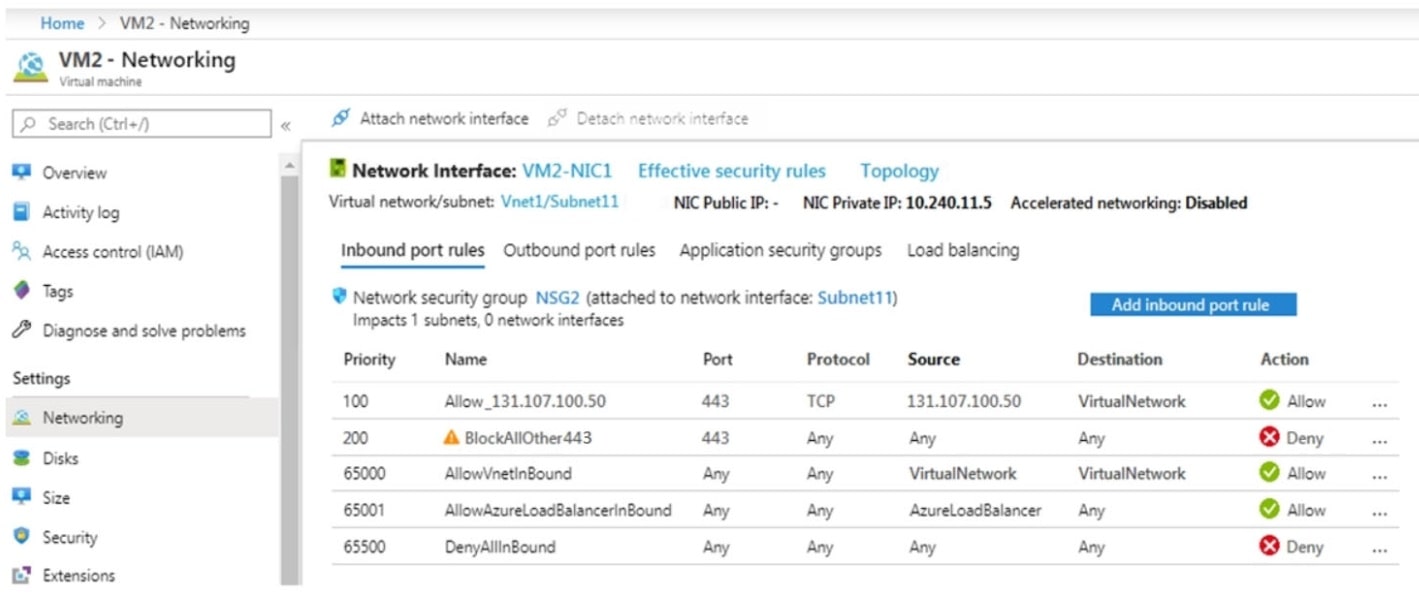
You discover that connections to App1 from 131.107.100.50 over TCP port 443 fail.
You verify that the Load Balancer rules are configured correctly.
You need to ensure that connections to App1 can be established successfully from 131.107.100.50 over TCP port 443.
Solution: You create an inbound security rule that allows any traffic from the AzureLoadBalancer source and has a priority of 150.
Does this meet the goal?
- A. Yes
- B. No
You have an Azure subscription that contains the resources shown in the following table.
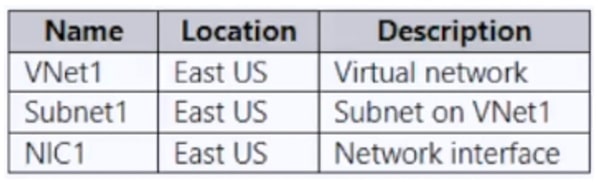
You create a route table named RT1 in the East US Azure region.
To which resources can you associate RT1?
- A. VNet1 only
- B. Subnet1 only
- C. VNet1 and NIC1 only
- D. Subnet1 and NIC1 only
- E. VNet1, Subnet1, and NIC1
HOTSPOT
–
You have an Azure subscription that contains the virtual networks shown in the following table.
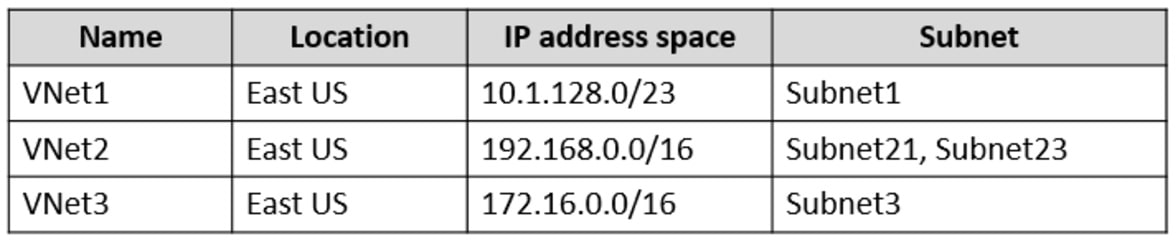
The subnets have the IP address spaces shown in the following table.
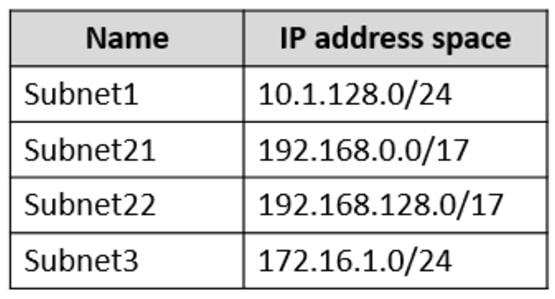
You plan to create a container app named contapp1 in the East US Azure region.
You need to create a container app environment named con-env1 that meets the following requirements:
• Uses its own virtual network.
• Uses its own subnet.
• Is connected to the smallest possible subnet.
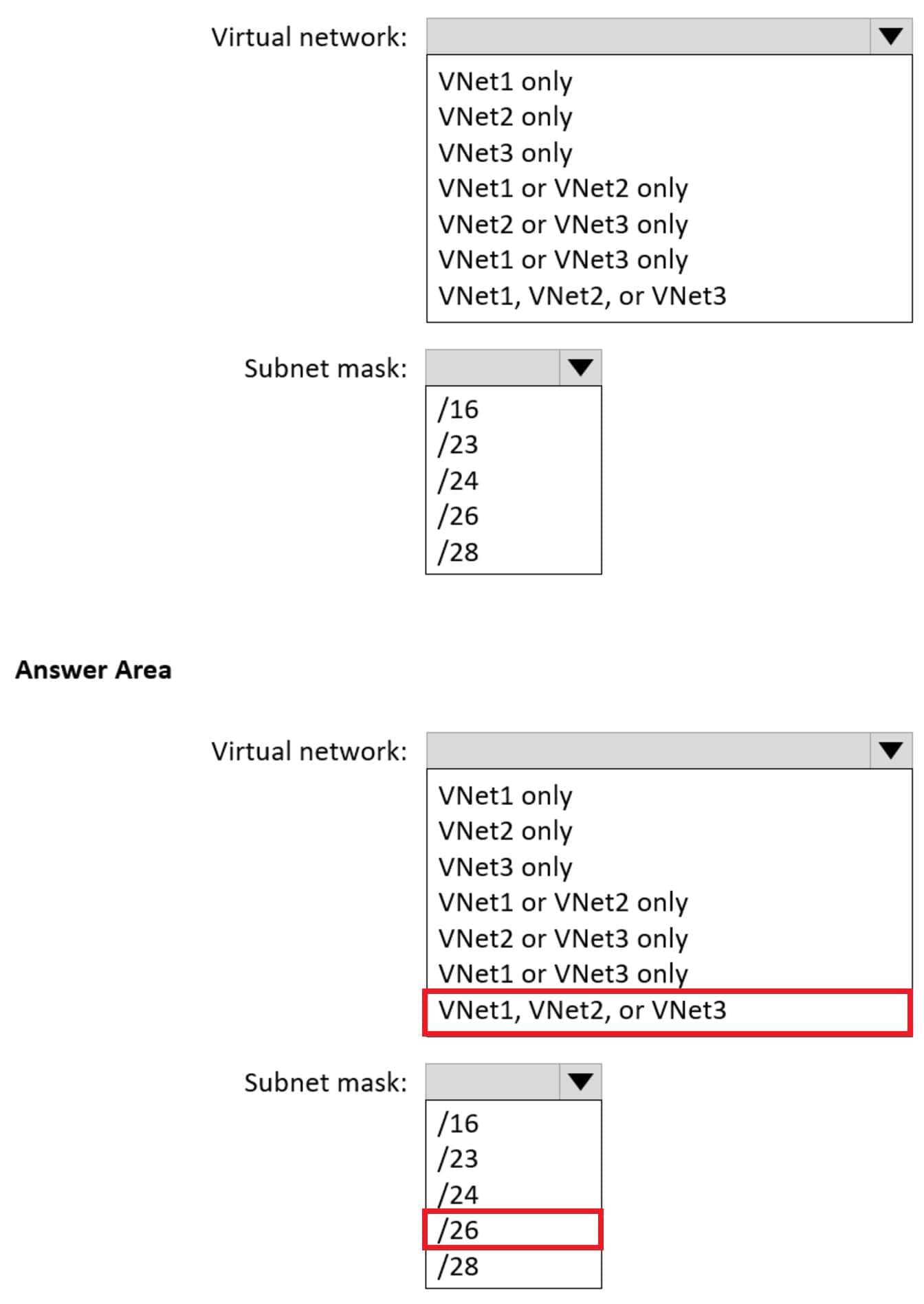
To which virtual networks can you connect con-env1, and which subnet mask should you use? To answer, select the appropriate options in the answer area.
NOTE: Each correct selection is worth one point.
You have an Azure subscription that contains the virtual networks shown in the following table.
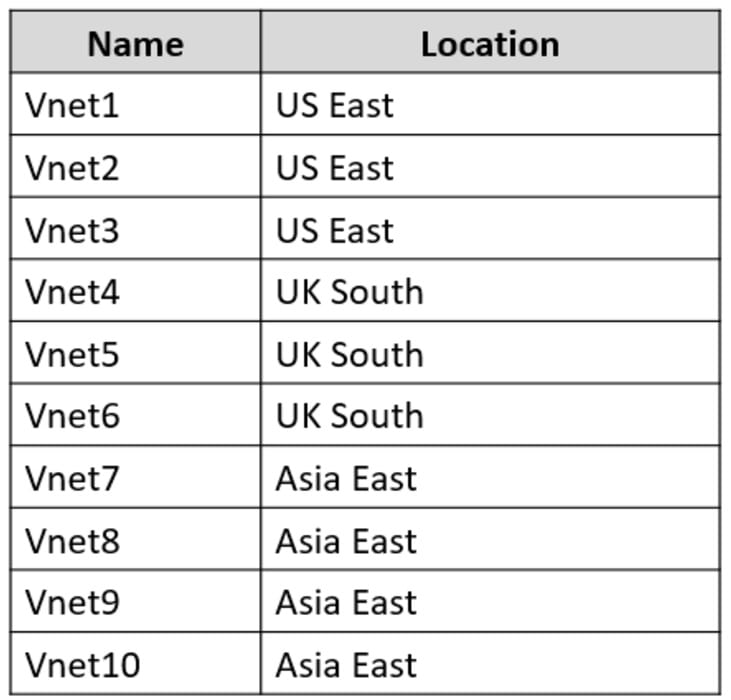
All the virtual networks are peered. Each virtual network contains nine virtual machines.
You need to configure secure RDP connections to the virtual machines by using Azure Bastion.
What is the minimum number of Bastion hosts required?
- A. 1
- B. 3
- C. 9
- D. 10
HOTSPOT
–
You have an Azure subscription that contains the virtual networks shown in the following table.
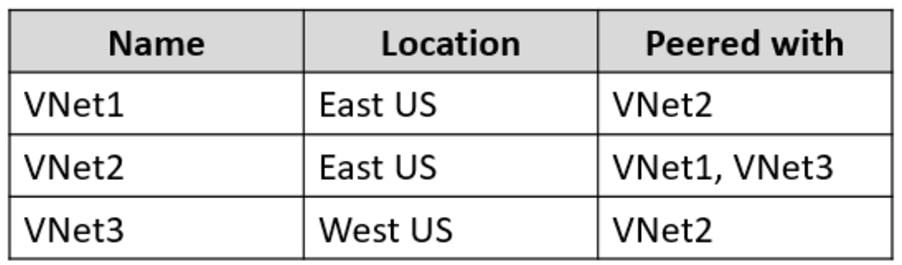
The subscription contains the virtual machines shown in the following table.
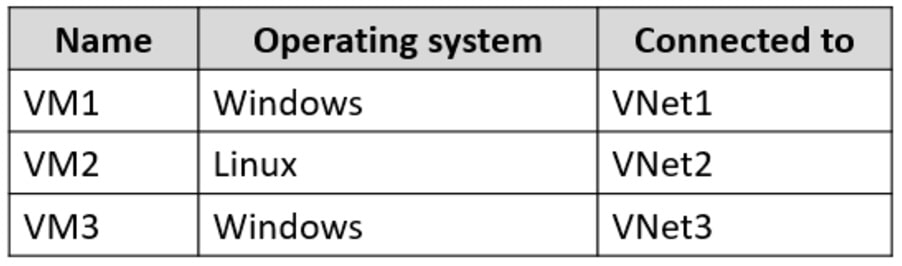
Each virtual machine contains only a private IP address.
You create an Azure bastion for VNet1 as shown in the following exhibit.
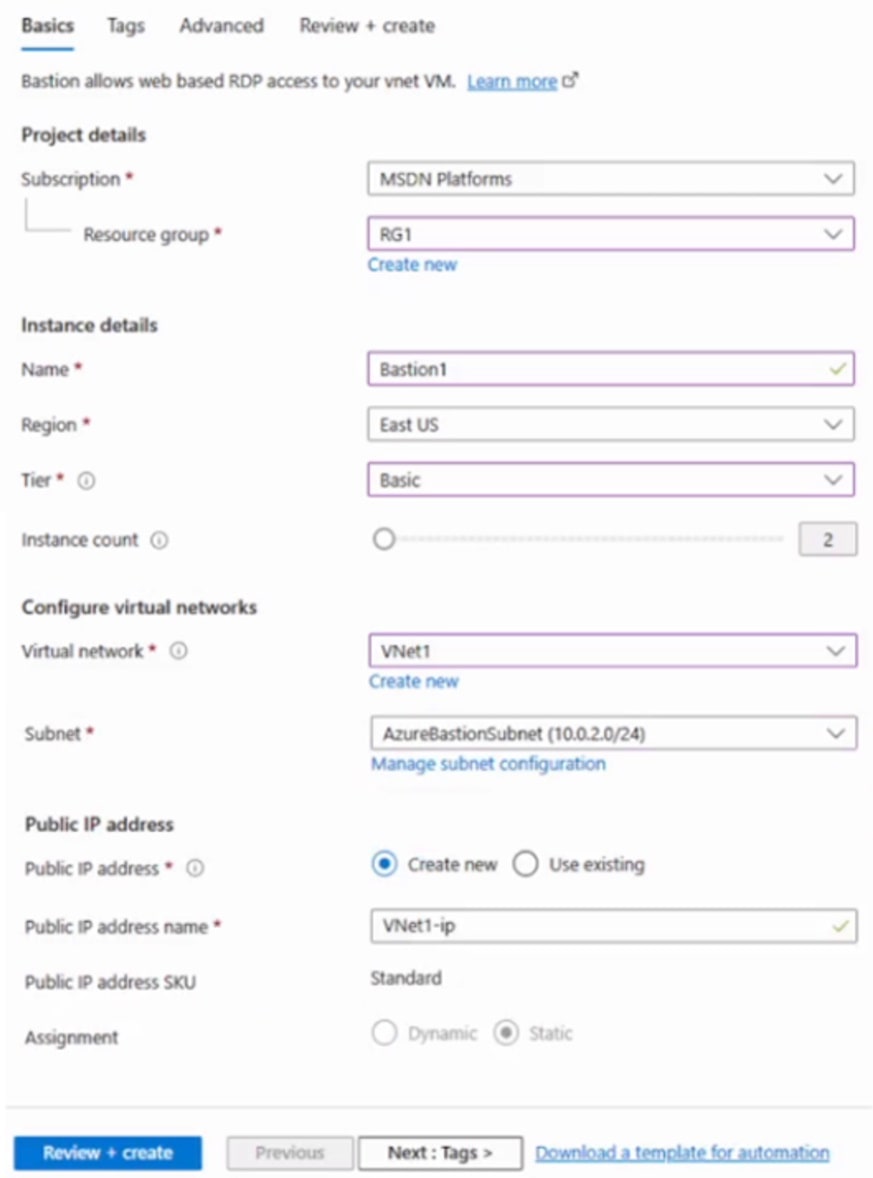
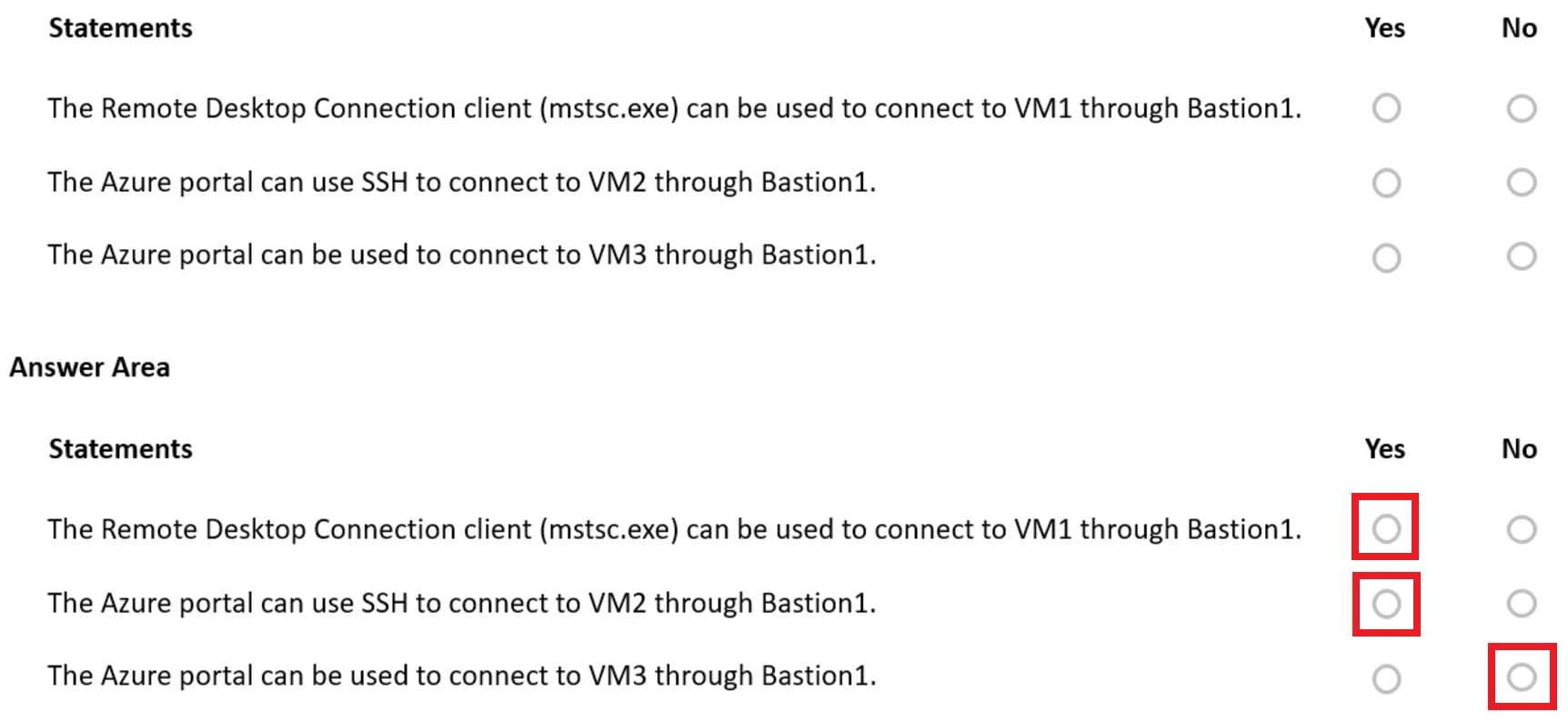
For each of the following statements, select Yes if the statement is true. Otherwise, select No.
NOTE: Each correct selection is worth one point.
HOTSPOT
–
You have an Azure subscription that contains the virtual networks shown in the following table.
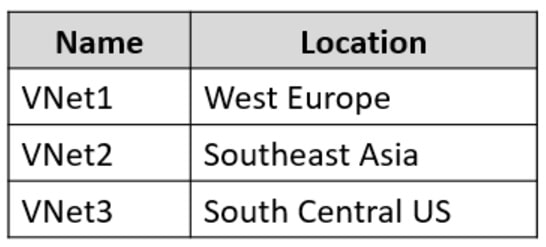
The subscription contains the subnets shown in the following table.
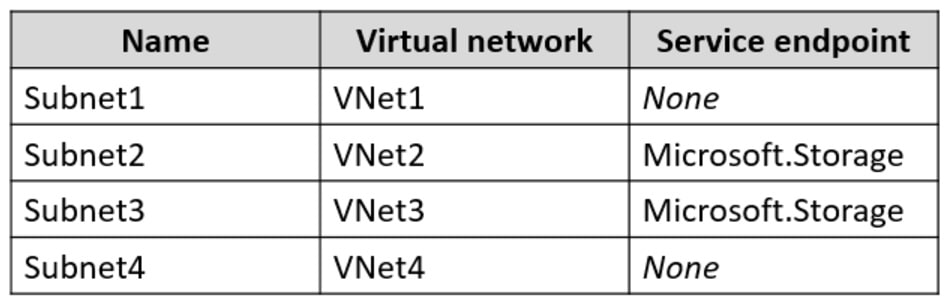
The subscription contains the storage accounts shown in the following table.
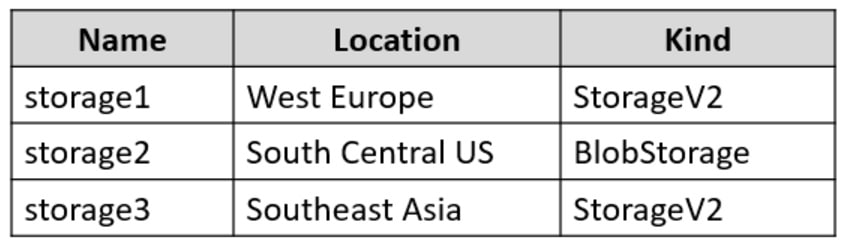
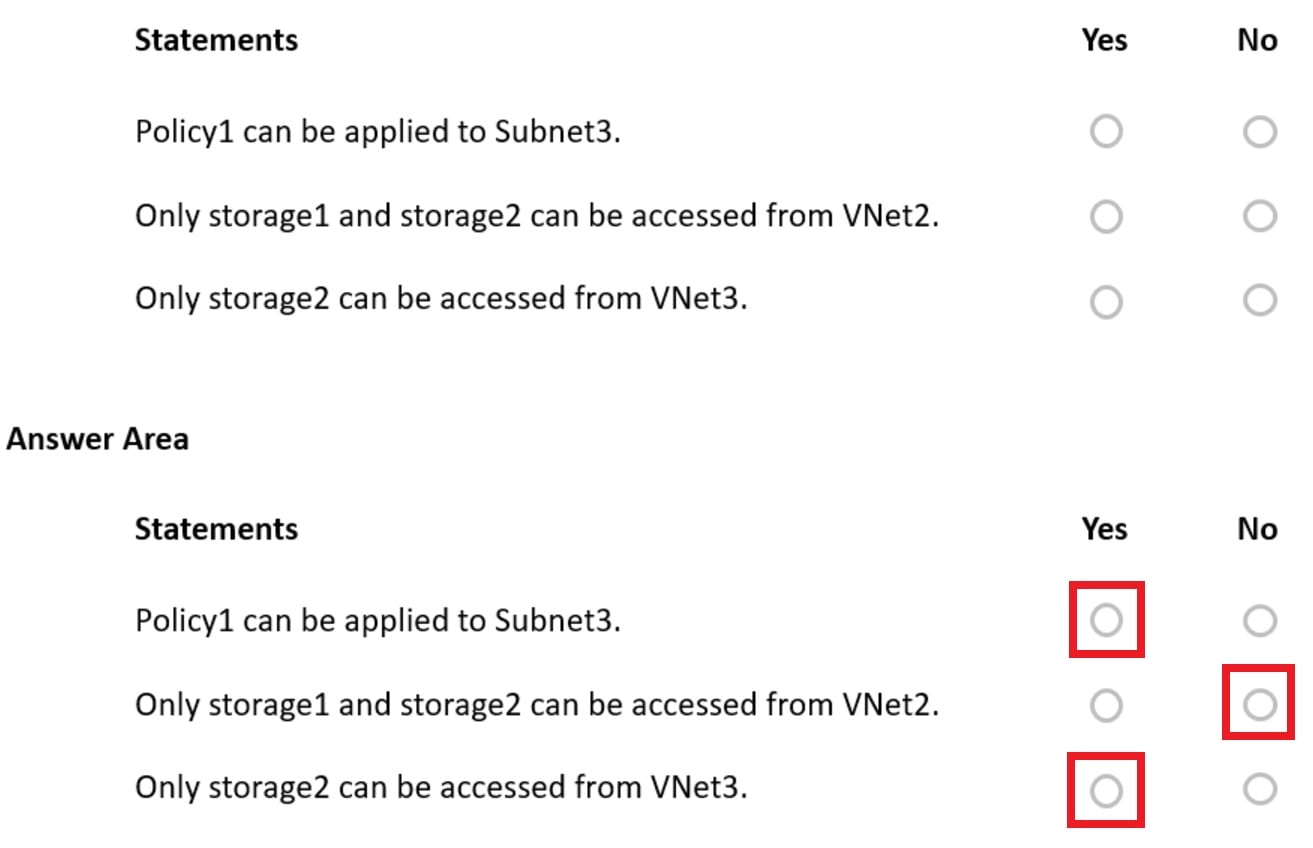
You create a service endpoint policy named Policy1 in the South Central US Azure region to allow connectivity to all the storage accounts in the subscription.
For each of the following statements, select Yes if the statement is true. Otherwise, select No.
NOTE: Each correct selection is worth one point.
You have an Azure virtual network named VNet1 that contains the following settings:
• IPv4 address space: 172.16.10.0/24
• Subnet name: Subnet1
• Subnet address range: 172.16.10.0/25
What is the maximum number of virtual machines that can connect to Subnet1?
- A. 24
- B. 25
- C. 123
- D. 128
- E. 251
You have an Azure subscription that contains a resource group named RG1 and a virtual network named VNet1.
You plan to create an Azure container instance named container1.
You need to be able to configure DNS name label scope reuse for container1.
What should you configure for container1?
- A. the private networking type
- B. the public networking type
- C. a new subnet on VNet1
- D. a confidential SKU
DRAG DROP
–
You have an Azure subscription that contains a resource group named RG1.
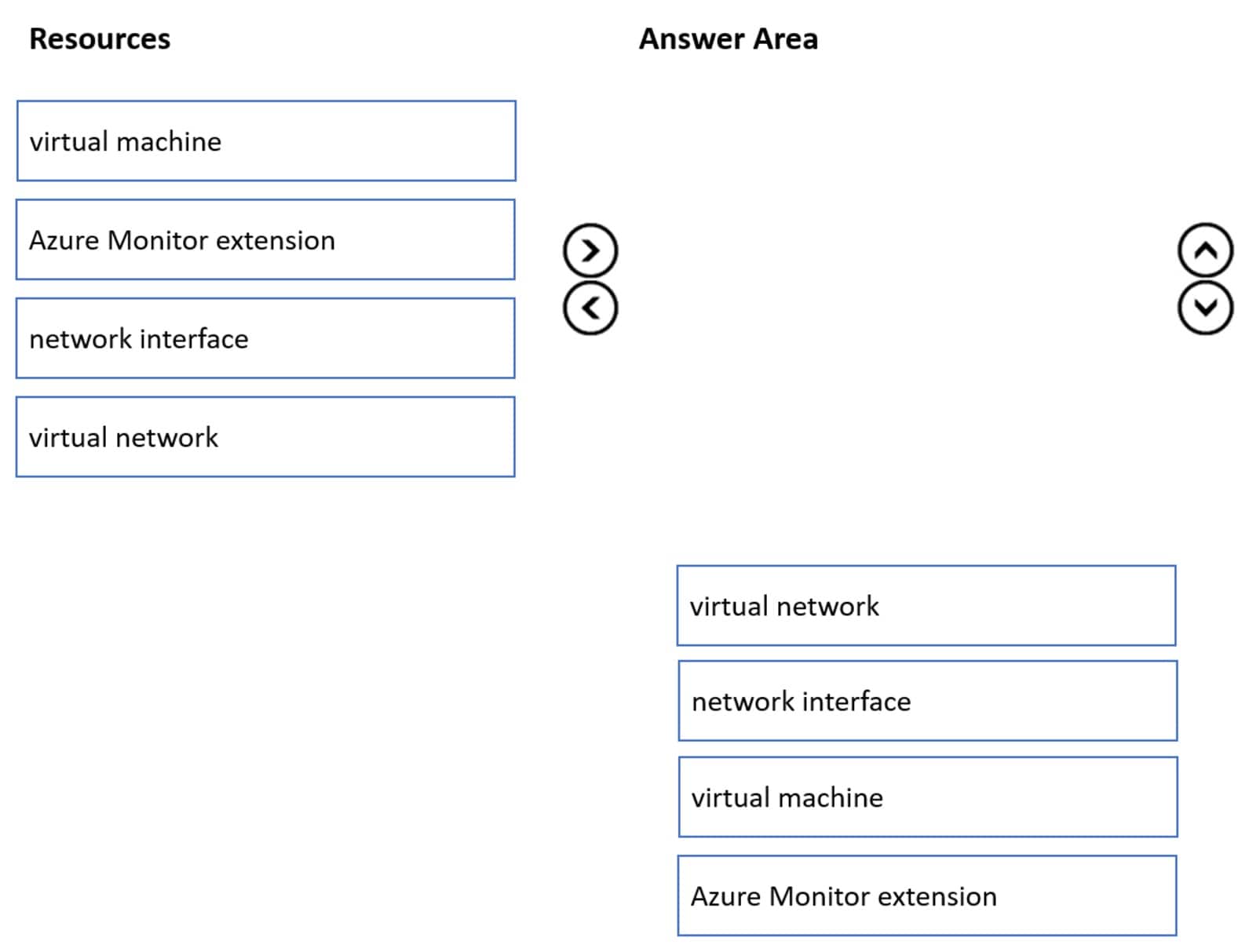
You plan to create an Azure Resource Manager (ARM) template to deploy a new virtual machine named VM1. VM1 must support the capture of performance data.
You need to specify resource dependencies for the ARM template.
In which order should you deploy the resources? To answer, move all resources from the list of resources to the answer area and arrange them in the correct order.
You plan to deploy several Azure virtual machines that will run Windows Server 2019 in a virtual machine scale set by using an Azure Resource Manager template.
You need to ensure that NGINX is available on all the virtual machines after they are deployed.
What should you use?
- A. a Desired State Configuration (DSC) extension
- B. a Microsoft Intune device configuration profile
- C. the Publish-AzVMDscConfiguration cmdlet
- D. the New-AzConfigurationAssignment cmdlet