
Pass Microsoft AZ-900 in Just 3 Days – Stress-Free, No Study Needed!
Have questions? Contact us directly on WhatsApp for quick support!
HOTSPOT –
Select the answer that correctly completes the sentence.
Hot Area:
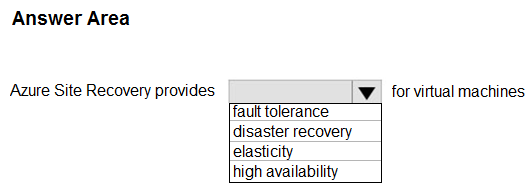
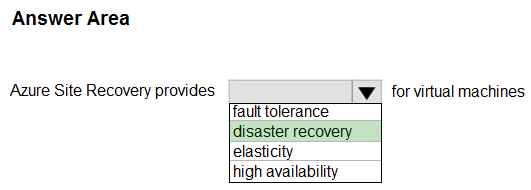
You set up disaster recovery for Azure VMs using Azure Site Recovery.
Reference:
https://docs.microsoft.com/en-us/azure/site-recovery/azure-to-azure-tutorial-enable-replication
HOTSPOT –
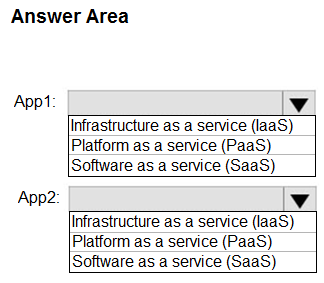
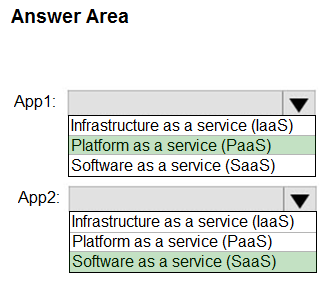
You plan to use Azure to host two apps named App1 and App2. The apps must meet the following requirements:
✑ You must be able to modify the code of App1.
✑ Administrative effort to manage the operating system of App1 must be minimized.
✑ App2 must run interactively with the operating system of the server.
Which type of cloud service should you use for each app? To answer, select the appropriate options in the answer area.
NOTE: Each correct selection is worth one point.
Hot Area:
Organizations typically use PaaS for these scenarios:
Development framework. PaaS provides a framework that developers can build upon to develop or customize cloud-based applications. Similar to the way you create an Excel macro, PaaS lets developers create applications using built-in software components. Cloud features such as scalability, high-availability, and multi-tenant capability are included, reducing the amount of coding that developers must do.
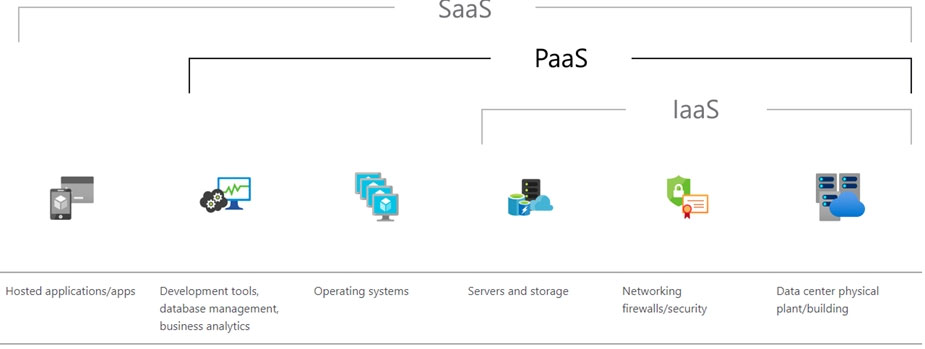
Software as a service (SaaS) allows users to connect to and use cloud-based apps over the Internet. Common examples are email, calendaring, and office tools
(such as Microsoft Office 365).
SaaS provides a complete software solution that you purchase on a pay-as-you-go basis from a cloud service provider. You rent the use of an app for your organization, and your users connect to it over the Internet, usually with a web browser. All of the underlying infrastructure, middleware, app software, and app data are located in the service provider’s data center. The service provider manages the hardware and software, and with the appropriate service agreement, will ensure the availability and the security of the app and your data as well. SaaS allows your organization to get quickly up and running with an app at minimal upfront cost.
Reference:
https://azure.microsoft.com/en-us/overview/what-is-paas/
You have an accounting application named App1 that uses a legacy database.
You plan to move App1 to the cloud.
Which service model should you use?
- A. platform as a service (PaaS)
- . infrastructure as a service (IaaS)
- C. software as a service (SaaS)
Microsoft 365 is an example of which cloud service model?
- A. infrastructure as a service (IaaS)
- B. platform as a service (PaaS)
- C. software as a service (SaaS)
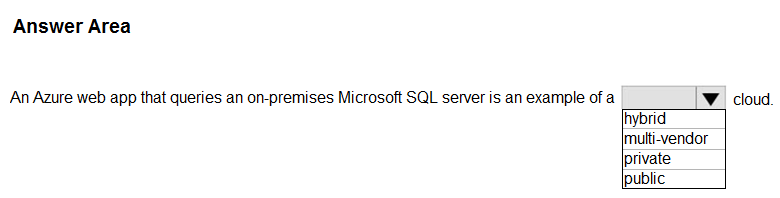
Select the answer that correctly completes the sentence.
Hot Area:
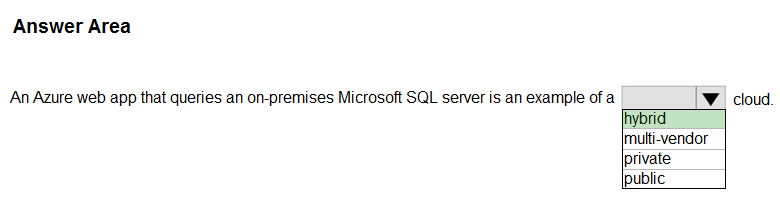
Box: hybrid –
You can deploy hybrid app with on-premises data that scales cross-cloud.
Reference:
https://docs.microsoft.com/en-us/azure/architecture/hybrid/deployments/solution-deployment-guide-cross-cloud-scaling-onprem-data
HOTSPOT –
Select the answer that correctly completes the sentence.
Hot Area:
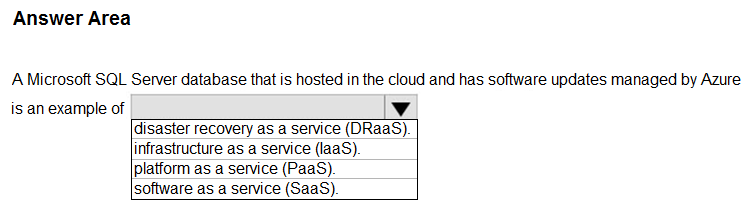
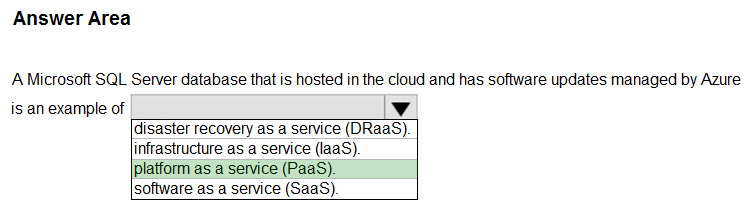
Box: Platform as a service (PaaS)
Platform as a service (PaaS) is a complete development and deployment environment in the cloud, with resources that enable you to deliver everything from simple cloud-based apps to sophisticated, cloud-enabled enterprise applications. You purchase the resources you need from a cloud service provider on a pay- as-you-go basis and access them over a secure Internet connection.
Like IaaS, PaaS includes infrastructureג€”servers, storage, and networkingג€”but also middleware, development tools, business intelligence (BI) services, database management systems, and more.
Reference:
https://azure.microsoft.com/en-us/overview/what-is-paas/
Which cloud computing model includes on-premises and cloud-based resources?
- A. hybrid
- B. public
- C. private
Select the answer that correctly completes the sentence.
Hot Area:
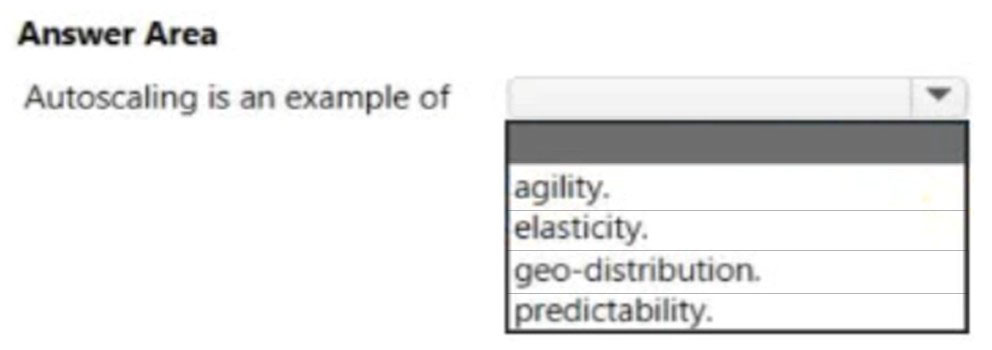
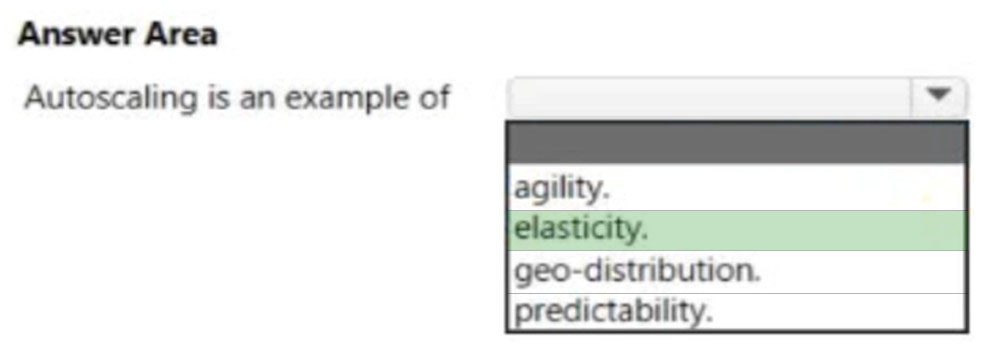
An Azure virtual machine scale set can automatically increase or decrease the number of VM instances that run your application. This automated and elastic behavior reduces the management overhead to monitor and optimize the performance of your application.
Also: Azure elasticity as a service is referred to a cloud service that enables in automatically scaling Azure hosted resources in par with the demand and configured parameters. It provides Azure Administrators with the ability to auto scale Azure infrastructure and resources as and when needed.
Reference:
https://docs.microsoft.com/en-us/azure/virtual-machine-scale-sets/virtual-machine-scale-sets-autoscale-overview https://www.netreo.com/cloud-automation/what-is-azure-elasticity-as-a-service/
HOTSPOT –
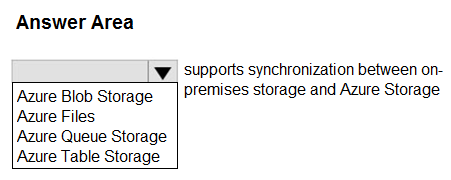
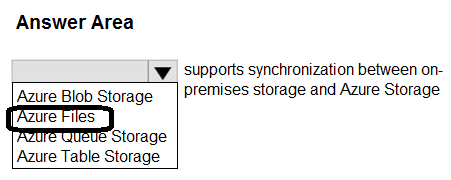
Select the answer that correctly completes the sentence.
Which term represents the ability to increase the computing capacity of a virtual machine by adding memory or CPUs?
- A. agility
- B. vertical scaling
- C. horizontal scaling
- D. elasticity